
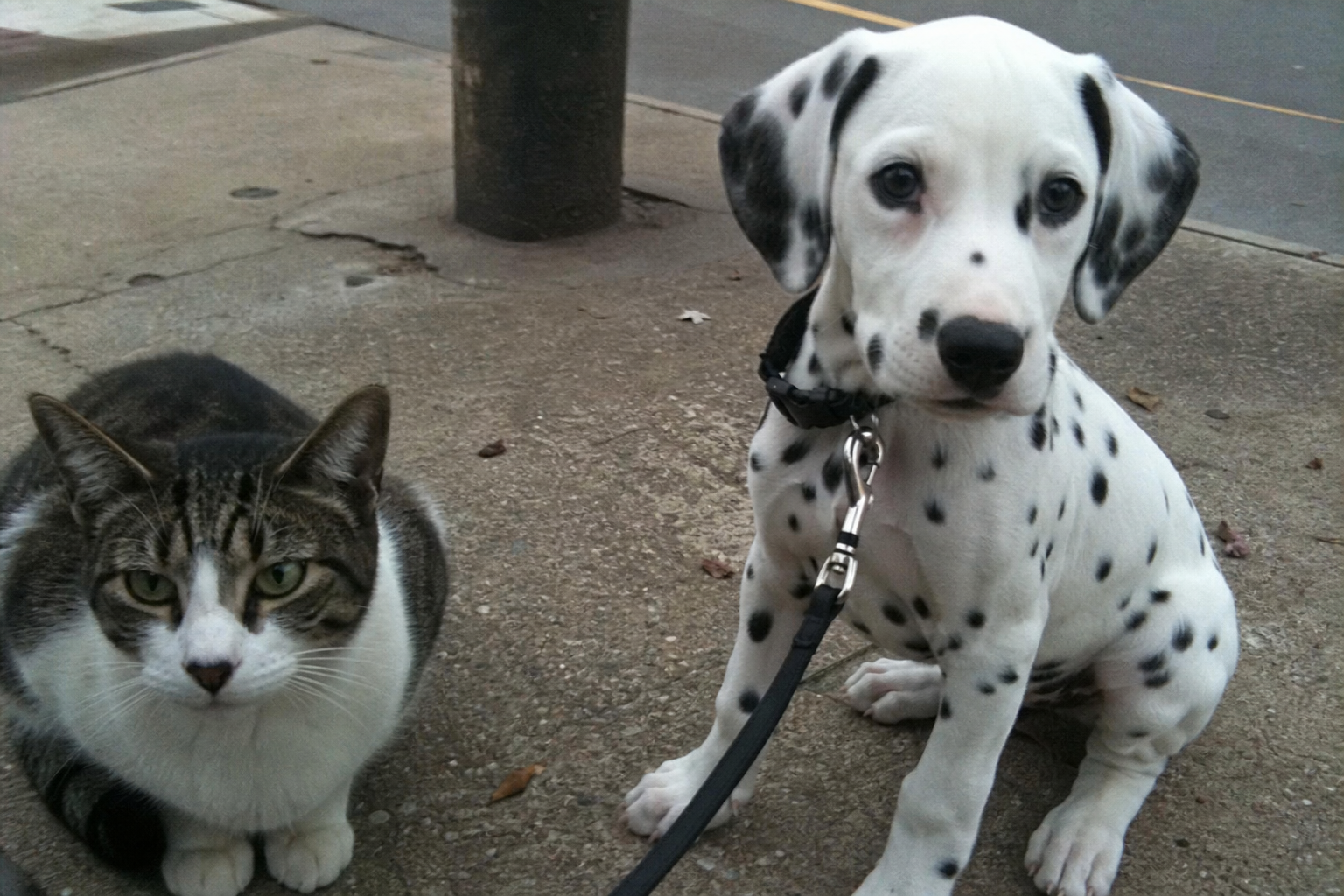
Puppy
The Puppy That Meows Like A Cat Is Showing You The Most Important Window In Dog Development
TikTok's "catdog" puppy went viral for adopting cat behavior after a week with a cat. The real story is the contrarian truth about early socialization.
The Catdog Puppy
A recent viral video from the TikTok account @house.of.barks went massive earlier this year. It showed a puppy that had been adopted into a household with a cat for one week, and after that week the puppy had started meowing instead of barking. The internet found this hilarious and confusing in equal measure. Comment sections debated whether it was real, faked, or some kind of unholy cat-dog hybrid behavior. It is real. It is also one of the most useful real-world demonstrations of canine early socialization that has ever gone viral, and the cute framing buries the actual lesson. What happened to that puppy in seven days is a tiny visible version of what happens to every puppy in the first three to fourteen weeks of their lives, in every direction at once. The puppy you bring home is being assembled in real time by every stimulus around it. Meowing is just the version of that fact that fits on a phone screen.
Puppies Are Sensory Sponges
The technical term is "the critical socialization period," and it runs roughly from 3 weeks to 14 weeks of age. During this window, a puppy's brain is in a state of maximum neuroplasticity. Whatever is in the environment becomes their normal. Sounds. Smells. Surfaces. Species. Vocalizations. The puppy is not learning these things consciously. The puppy is wiring its baseline reality. This is why a puppy raised around livestock grows up unfazed by horses. Why a puppy raised in a quiet rural house panics at urban traffic. Why a puppy raised with a cat for one week starts meowing. The brain takes in the available signals and treats them as the default version of the world. After 14 weeks, the door does not slam shut, but it narrows dramatically. New stimuli get harder to integrate. Fears become stickier.
Get dog advice that actually works.
The Single Puppy Problem
Most first-time puppy buyers have never heard of the singleton puppy problem, but every breeder and rescue I know has. A puppy raised alone, without littermates, often has significant lifelong behavior issues. They missed the rough-and-tumble play that teaches bite inhibition. They missed the canine vocalization patterns that teach dog-to-dog communication. They missed the constant low-level competition for milk, warmth, and space that teaches frustration tolerance. The catdog puppy went viral because adopting one species' vocalization looks cute. The same mechanism, run in the wrong direction, produces adult dogs who cannot read other dogs, cannot tolerate frustration, and cannot regulate arousal. The cute version makes a TikTok. The damaged version becomes the dog your trainer can't fix at age three.
Cassette the Dalmatian
I walk a Dalmatian named Cassette on Fridays. Cassette's owner collects vintage tape decks — Nakamichis, TEACs, reel-to-reels — and has them stacked floor-to-ceiling in a one-bedroom apartment. He bought Cassette as a 9-week-old puppy and proudly told me she had spent her entire early life "in a calm, quiet home with no chaos." Translation: she saw no other dogs, no children, no traffic, no household appliances she had not already encountered. By six months Cassette was terrified of every dog she met and would scream-bark at strollers. By a year she could not walk down a city block without panicking. We are eighteen months into a structured socialization rebuild and she is functional but never going to be relaxed in a busy environment. The window was open. The owner closed it.
Use The Window
The catdog puppy is going to be fine. Meowing is a harmless quirk, the cat is presumably a good influence, and the household sounds stable. The lesson is not "raise your puppy with a cat." The lesson is that your puppy is being built by exposure right now, whether you are paying attention or not. Every sound, surface, species, and routine inside that fourteen-week window becomes the dog's baseline reality. Use the window deliberately. Expose your puppy to traffic, vacuums, men with hats, kids on scooters, elevators, slippery floors, other dogs, livestock if you can swing it. Keep it low-pressure and positive. Stop trying to keep your puppy in a "calm environment." A puppy in a calm environment becomes an adult dog who cannot handle the world. The world is the curriculum. Teach it before the door closes.

Written by
Sammie LaFleur
Professional Dog Walker
Sammie LaFleur is a professional dog walker. She owns three dogs, walks five regular client dogs a day, five days a week, and takes on at least ten new dogs every month. She is an avid reader who enjoys digging into dog science whitepapers. Her writing is built from street-level dog behavior and real data, not recycled pet industry talking points. Her mission is to decode canine body language so owners can stop fighting their dogs and start understanding them. For Sammie, success is measured by a single metric: increasing the number of stress-free, sunny day walks a dog gets to enjoy each year. She writes to bridge the communication gap between species, because she knows exactly what dogs want and what makes them thrive.