Body Language
Dog Tail Positions And What They Usually Mean
The pet industry oversimplifies tail wags. As a pro walker, here is the contrarian truth about what your dog's tail height and speed actually mean.
The Wagging Tail Misconception
I walk five dogs a day, five days a week, and the most dangerous misconception I have to correct for new clients is the idea that a wagging tail always means a friendly dog. The pet industry has conditioned us to believe that a moving tail equals a happy dog. That is a massive, dangerous oversimplification. A wagging tail does not mean a dog is happy; it simply means a dog is emotionally aroused. That arousal could be joy, but it could also be intense anxiety, overstimulation, or impending aggression. If you reach out to pet a strange dog just because their tail is moving, you are playing Russian roulette. My own dog, a rescue mutt named Professor Spaghetti, wags his tail furiously right before he tries to eat the mailman. You have to stop looking at the wag and start looking at the height and the tension.
The Stiff Flagpole (High and Tight)
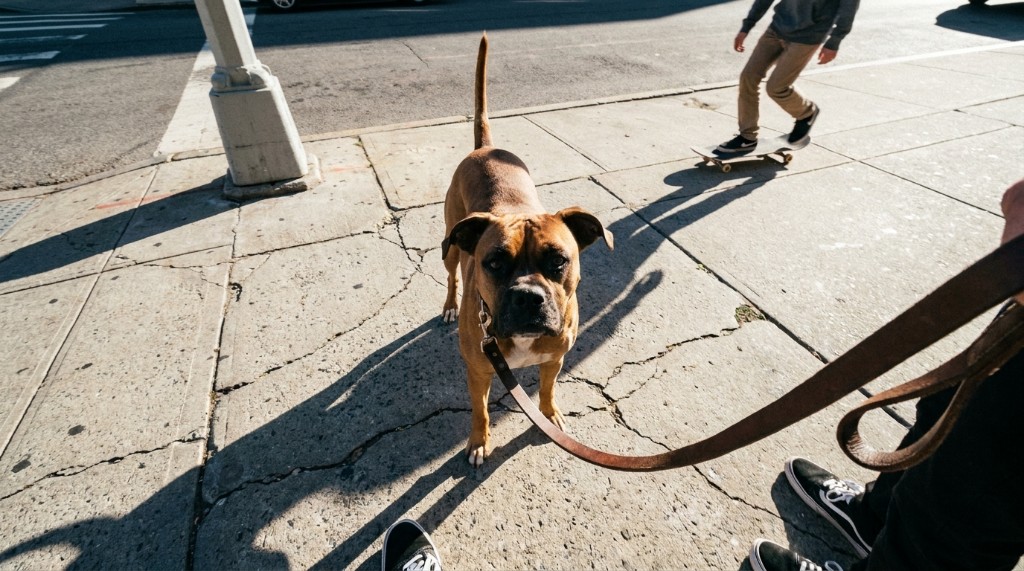
When I take on a new client dog, the first thing I look for on our initial walk is the 'Flagpole.' This is when the tail is held stiffly straight up in the air, often with just the very tip vibrating rapidly. This is not a friendly greeting. This is a dog making themselves look as large as possible. It is a sign of extreme tension and assertiveness. I walk a Boxer mix named Count Chocula who throws up the Flagpole every time we pass a skateboarder. (Side note: if you walk your dog on one of those cheap, plastic retractable leashes while they are throwing a Flagpole, you are a menace to society. Throw it in the trash and buy a 6-foot leather lead). If I let a stranger approach Count Chocula when his tail is locked high and vibrating, somebody is getting bitten. A high, stiff tail means 'Do not approach.'
Get dog advice that actually works.
The Tucked Tail (Fear vs. Pain)
Everyone knows that a tail tucked tightly between the back legs means the dog is terrified. But what the textbooks don't tell you is that a tucked tail can also be a primary indicator of physical pain. I had a client with a stoic Greyhound named Vincenzo Di Gorgonzola. The owner thought Vincenzo was suddenly terrified of the hardwood floors because he started walking around with his tail clamped down. I told them to take him to the vet. It wasn't fear; Vincenzo was having a severe arthritis flare-up in his lower spine. Dogs hide pain incredibly well, but their tail base is directly connected to their spine. If a normally confident dog suddenly tucks their tail, stop looking for monsters and start looking for injuries.
The Helicopter Sweep (The True Happy Tail)
So, what does a genuinely happy tail look like? It’s not a stiff, rapid wag. A truly relaxed, joyful dog wags their tail with their entire body. I call it the 'Helicopter Sweep.' The tail is held at a neutral, mid-level height, and the wag is loose and sweeping, often causing the dog's entire rear end to wiggle back and forth in a 'U' shape. The muscles at the base of the tail are completely relaxed. When I show up at a client's house and their Golden Retriever meets me at the door with a loose, full-body Helicopter Sweep, I know we are going to have a great walk. I usually reward a good Helicopter Sweep with a piece of freeze-dried beef liver. I only use the single-ingredient stuff. If you are still buying those neon-colored, bacon-flavored grocery store treats, you need to stop. They are packed with red dye #40 and cheap corn syrup. I swear, half the 'behavioral issues' my clients complain about are just dogs coming down from a sugar and artificial dye crash. Feed them real meat, and watch how much faster they calm down. Tension is the enemy; looseness is joy.
The Left-Brain/Right-Brain Wag
I actually learned the most fascinating thing about tail wags from Emily Larlham on her *Kikopup* YouTube channel. She did this brilliant breakdown on how to film your own training sessions to read micro-body language, and it sent me down a rabbit hole on canine neurology. It turns out, the direction of the wag actually matters. Dogs process positive emotions in the left side of their brain, which controls the right side of their body. When a dog is feeling relaxed and approachable, their tail wag will naturally bias slightly to their right side. When they are feeling anxious or want to withdraw, the wag biases to their left. You don't need a degree in neurology to use this. Just watch the rhythm. If the tail is stiff, high, or biased to the left, give the dog space. If I'm evaluating a new dog and I can't quite read their tail tension, I'll log the interaction to see if their vocalizations match their body language. Stop trusting the wag, and start reading the tension.

Written by
Sammie LaFleur
Professional Dog Walker
Sammie LaFleur is a professional dog walker. She owns three dogs, walks five regular client dogs a day, five days a week, and takes on at least ten new dogs every month. She is an avid reader who enjoys digging into dog science whitepapers. Her writing is built from street-level dog behavior and real data, not recycled pet industry talking points. Her mission is to decode canine body language so owners can stop fighting their dogs and start understanding them. For Sammie, success is measured by a single metric: increasing the number of stress-free, sunny day walks a dog gets to enjoy each year. She writes to bridge the communication gap between species, because she knows exactly what dogs want and what makes them thrive.