
Body Language
The "Happy Tail" Myth: What Your Dog's Body Language is Actually Saying
Forget the generic corporate pet advice. A wagging tail doesn't always mean happy. Here is what a Boxer-Pit mix taught me about the 'Red Zone' and how to break a dog's hyper-fixation.
The "Happy Tail" Myth
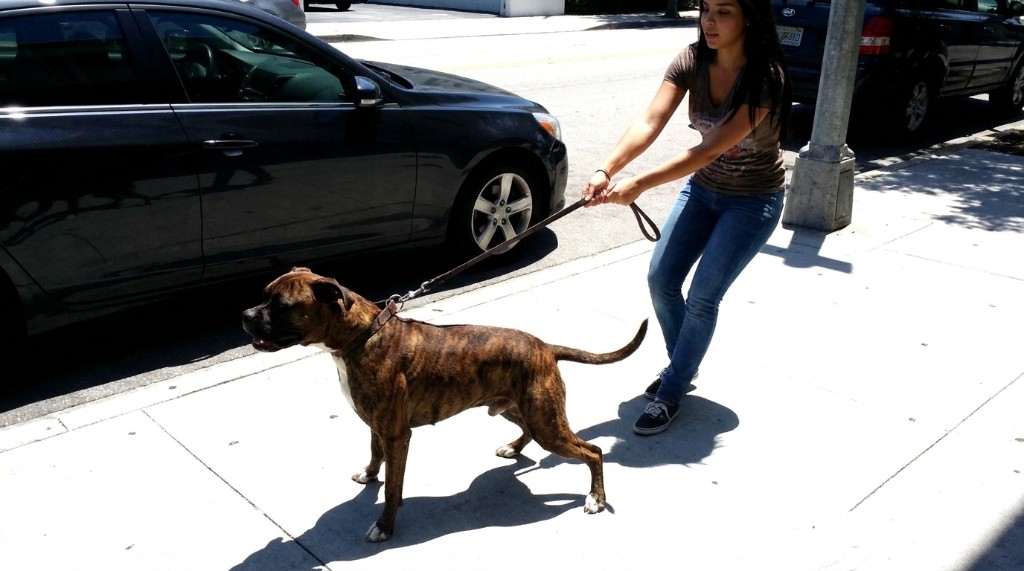
I walk five dogs a day, five days a week, and take on at least ten new client dogs every month. If I relied on the generic "dog body language" charts you find on the first page of Google, I would have been bitten a hundred times by now. The corporate pet industry has trained owners to look for the wrong things. The most dangerous myth? *“If the tail is wagging, the dog is happy.”* Let me tell you about a Boxer-Pit mix I walk on Tuesdays named Meatball. I usually walk him with my friend Sarah. Sarah loves taking pictures of the dogs, but she absolutely refuses to let me post them on social media—she hates the internet and won't even let me tag her—so I can never share videos of our Tuesday pack, which is a shame because they are hilarious. Anyway, back to Meatball. Meatball saw a stray cat under a parked car. His tail was wagging furiously—like a windshield wiper on high speed. The owner, who was handing me the leash, smiled and said, "Oh look, he wants to play!" I knew we had about two seconds before Meatball ripped my shoulder out of its socket. A wagging tail doesn't mean "happy." It means **high arousal and energy**. You have to look at the *base* of the tail and the spine. Meatball’s tail was stiff at the base, his spine was rigid, and his weight was shifted entirely to his front paws. He wasn't happy; he was locked on target.
The "White Noise" Effect
When a dog’s body language shifts into this "Red Zone" of hyper-fixation, a massive biological change happens: **they literally stop hearing you.** This is the biggest mistake dog owners make. When your dog is stiff, fixated, and highly stimulated, their brain filters out human language. I knew Meatball couldn't hear me, and I've tested this exact scenario multiple times. I even started bringing actual cheese on our walks just to prove it. I leaned in, held a piece of cheese right near his nose, and said "cheesies"—the absolute magic keyword for his favorite high-value treat. He didn't even flinch. His ears didn't flick. He didn't even sniff the cheese. To a dog in the Red Zone, your English words and your bribes are just meaningless white noise. Worse, if you are yelling in a panicked tone, the dog just thinks you are barking *with* them at the threat. You are escalating the situation. You cannot reason with a dog using human words when their body language is screaming pure instinct. You need a **Pattern Interrupt**.
Get dog advice that actually works.
How to Break the Fixation
A Pattern Interrupt is a stimulus that bypasses their thinking brain and hits their instinctual brain. When human words fail, you have to speak dog. When I have a dog locked onto a target and ignoring my voice, I don't yell. I use a sharp, recorded dog vocalization—specifically a 'Single Alert Bark.' According to research published in the *Journal of Veterinary Behavior*, dogs are biologically hardwired to prioritize conspecific (same-species) vocalizations over human commands during moments of high arousal. The result is instant. Because it is a biologically accurate dog sound, it cuts right through the white noise. Meatball’s head snapped around to look at me because another "dog" just spoke to him in a language he couldn't ignore. The sound translates roughly to: *"I see the threat, I am taking over guard duty, you are dismissed."* The second his head turned, his spine lost its rigidity. The fixation was broken. *Then*, and only then, did I use my human voice to say "Let's go," and we walked away without incident.
The Real Secret to Dog Body Language
Reading your dog's body language is only half the battle. The real secret is knowing what to do when their body language tells you they are no longer listening. Stop trying to explain things to your dog in English when they are stressed. Watch their spine, watch the tension in their jaw, and when they tune you out—stop talking. If you're dealing with a dog that is constantly threshold stacking on walks, you need to log their triggers and vocalizations to get a baseline. It forces you to actually pay attention to the patterns instead of just reacting to the explosions.

Written by
Sammie LaFleur
Professional Dog Walker
Sammie LaFleur is a professional dog walker. She owns three dogs, walks five regular client dogs a day, five days a week, and takes on at least ten new dogs every month. She is an avid reader who enjoys digging into dog science whitepapers. Her writing is built from street-level dog behavior and real data, not recycled pet industry talking points. Her mission is to decode canine body language so owners can stop fighting their dogs and start understanding them. For Sammie, success is measured by a single metric: increasing the number of stress-free, sunny day walks a dog gets to enjoy each year. She writes to bridge the communication gap between species, because she knows exactly what dogs want and what makes them thrive.