
Stress
Dog Yawning: Tired, Stressed, Or Communicating?
If you think your dog is just tired when they yawn, you're missing the bigger picture. Here's what professional dog walkers know about yawning.
The 'Sleepy Dog' Garbage
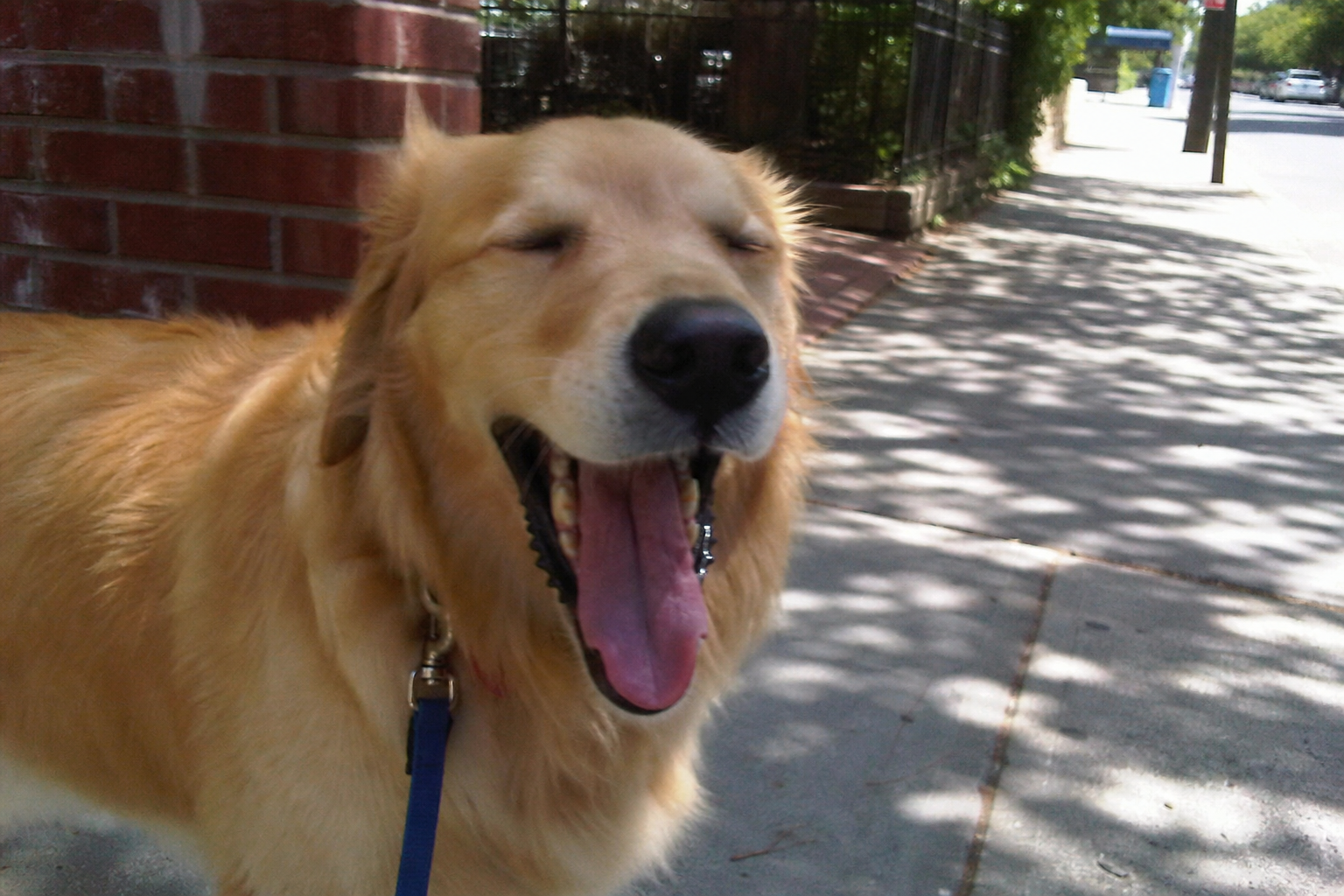
If I believed the generic pet blogs that say a yawning dog is just a tired dog, I would be terrible at my job. Assuming a yawn always means fatigue is a great way to ignore a dog that is begging for help. I walk five regulars a day, evaluate ten new dogs a month, and manage my own three at home. Take a look at a Golden Retriever I handle named Bailey. Her owner, Susan, insists on dressing her up in tight, restrictive raincoats whenever there is a slight drizzle. Susan also makes her husband wear matching outfits on vacations. Every time Susan forces Bailey's front legs into those plastic sleeves, Bailey yawns massively. Susan coos, 'Oh, is my little baby sleepy?' No, Susan. Bailey is stressed out of her mind. That yawn is a classic displacement behavior. She is trying to defuse her own anxiety because she hates the raincoat and feels trapped.
The Pacifying Yawn
Dogs also use yawning as a deliberate communication tool to de-escalate tension with humans and other dogs. It is a pacifying signal. If I lean over a nervous, newly rescued dog to clip on their leash, they will often look away from my face and let out a wide yawn. The internet will tell you to just push through, assert your dominance, and show them who is boss. That is garbage advice. When a dog yawns at you in a tense moment, they are politely asking for space. They are saying, 'I am not a threat, please back off and give me a second.' If you ignore that polite request and continue to pressure them, you are forcing them to escalate to a growl or a snap. Respect the yawn, give them a moment to process, and try again slowly.
Get dog advice that actually works.
The Anticipation Yawn
Interestingly, yawning isn't always about negative stress. It can also be a sign of extreme anticipation and positive overstimulation. I see this constantly with my core morning pack. When I pull my car up to the park and start getting the long lines out of the trunk, the dogs know exactly what is about to happen. They will start pacing, whining, and letting out these massive, high-pitched yawns. In this context, the yawn is a pressure-release valve for excitement. Their brains are so flooded with adrenaline and anticipation that they physically have to yawn to release some of that pent-up energy before they explode out of the car.
Context is Everything
The tricky thing about yawning is that you cannot read it in a vacuum. You have to look at the entire picture. Is the dog yawning while curled up in their bed at 9 PM? They are probably tired. Are they yawning while at the vet's office surrounded by strange dogs? They are stressed. You have to look at the accompanying body language. A stress yawn is usually accompanied by pinned ears, lip licking, and a tucked tail. If a dog is stuck in a loop of stress yawns, I play a recorded conspecific sound. It’s a simple pattern interrupt that bypasses their anxiety and forces them to re-evaluate the room.
The Biological Reset
When a dog is stress-yawning repeatedly, they are entering a state of severe anxiety. Trying to comfort them with human words like 'it's okay, buddy' is completely useless. Your English words are just white noise to a stressed canine brain. If your dog is frantically yawning while you force them into a stupid sweater or a crowded market, they are begging you to stop. Listen to them before they escalate to using their teeth.

Written by
Sammie LaFleur
Professional Dog Walker
Sammie LaFleur is a professional dog walker. She owns three dogs, walks five regular client dogs a day, five days a week, and takes on at least ten new dogs every month. She is an avid reader who enjoys digging into dog science whitepapers. Her writing is built from street-level dog behavior and real data, not recycled pet industry talking points. Her mission is to decode canine body language so owners can stop fighting their dogs and start understanding them. For Sammie, success is measured by a single metric: increasing the number of stress-free, sunny day walks a dog gets to enjoy each year. She writes to bridge the communication gap between species, because she knows exactly what dogs want and what makes them thrive.