Most owners completely miss the quiet signs of stress until the dog snaps. Here's what the corporate pet blogs won't tell you about canine anxiety.
Share
The 'He's Just Sleepy' Lie
If you read the first page of Google for 'dog stress signals,' you'll find a listicle written by an AI that tells you a yawning dog is just tired. That is a lazy, dangerous lie that gets dogs pushed past their breaking point every single day.
I manage my own three dogs, walk five regulars every single day, and onboard ten new clients a month. I see the results of this garbage advice constantly. Take Buster, a Dachshund whose owner, Greg, insists on bringing him to crowded farmer's markets. Greg is the kind of guy who talks loudly about his sourdough starter to anyone who will listen. Buster is terrified of strollers and loud noises. When Buster yawns frantically near the vegetable stands, Greg laughs and says, 'Oh, he's just sleepy.' Buster isn't tired. That yawn is a screaming stress signal. It's a displacement behavior meant to defuse tension and calm himself down. Ignoring it is cruel.
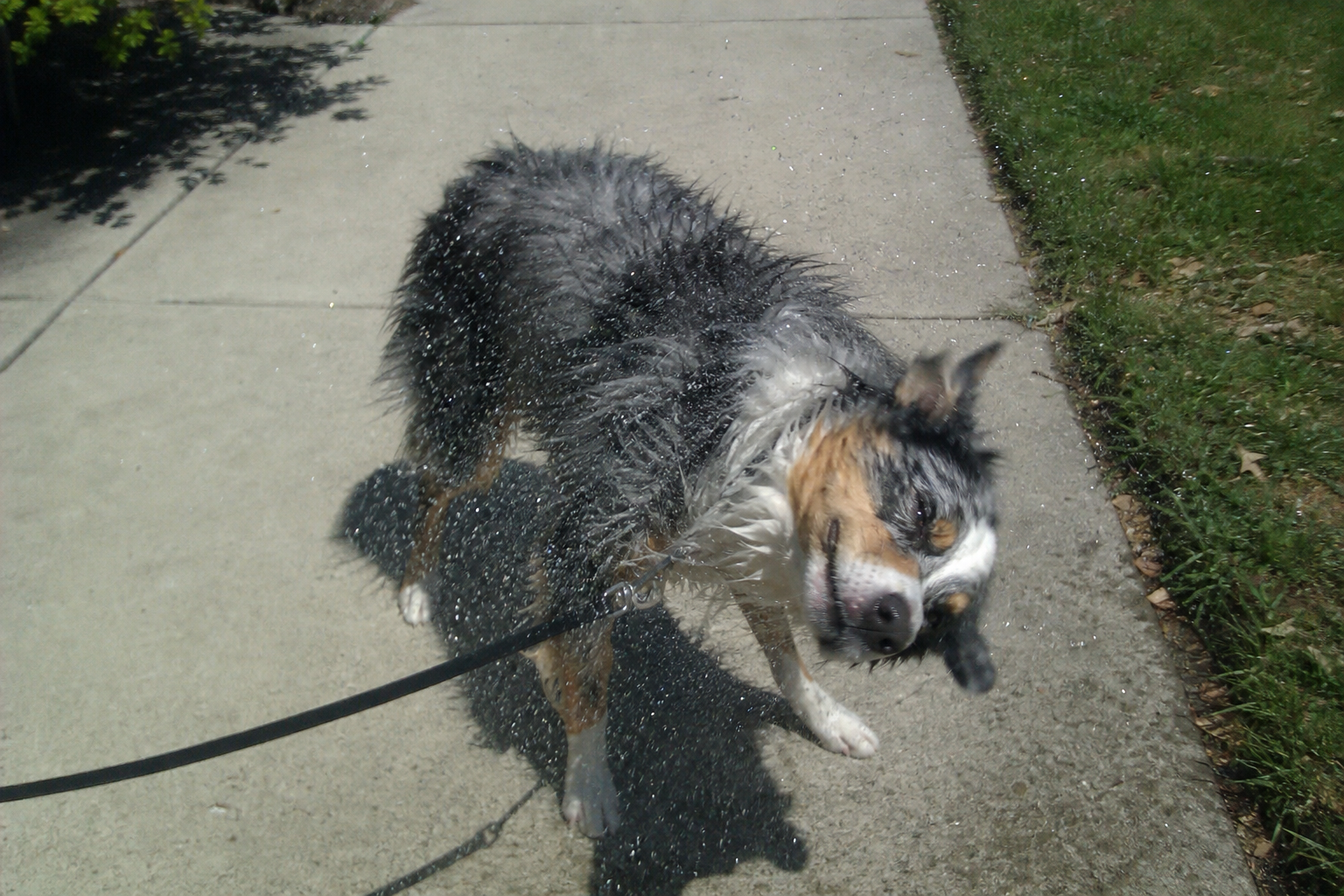
The 'Shake Off' Illusion
Another piece of absolute garbage advice is that when a dog shakes off—like they are drying off after a bath—they are 'resetting' and totally fine now. Wrong. When a dog shakes off after a tense encounter with another dog, they are dumping massive amounts of adrenaline.
It means they were pushed right to the absolute edge of their emotional threshold. If you see your dog do a full-body shake after a stressful event, they aren't 'fine.' Their nervous system is still flooded with cortisol. If you push them into another stressful situation three minutes later, they will snap. You have to read the room and give them space to decompress, not force them to keep marching like nothing happened.
Get dog advice that actually works.
The Silent Signals: Lip Licking and Pacing
Most owners completely miss the quiet signs of stress until the dog finally resorts to a growl. They wait for the explosion instead of reading the fuse. One of the most common silent signals is excessive lip licking outside of mealtime. It’s a quick flick of the tongue over the nose. It has absolutely nothing to do with hunger; it is pure anxiety.
Pacing is another massive red flag. A dog that cannot settle, constantly moving from room to room or pulling to the end of the leash in different directions, is a dog whose brain is spinning out of control. They are looking for an escape route. If you force a pacing, lip-licking dog to sit still and endure whatever is scaring them, you are destroying their trust in you.
The Threshold Stacking Danger
The reason you need to memorize these signals is because of a concept called 'Threshold Stacking.' A dog might tolerate a loud truck driving by. They might tolerate a weird stranger staring at them. They might tolerate a tight leash. But if all three happen within ten minutes, the stress stacks up until they explode.
If you can spot the stress yawn after the truck, and the lip lick after the stranger, you know you need to get the dog out of there before the tight leash causes a meltdown. You need to play a biological pattern interrupt sound the second you see that first lip lick. It breaks the stacking process before it spirals.
The Clinical Interrupt
When a dog is pacing, lip-licking, and stress-yawning repeatedly, their brain is spinning out of control. Your human words are just white noise. Telling them 'it's okay, buddy' does absolutely nothing to lower their heart rate. Stop treating your dog like a human toddler. If they are throwing off stress signals, get them out of the environment immediately instead of waiting for them to fail.
Liked it? Share it.
A quick note from the team: If you are dealing with a dog that won't listen to human commands, we built a tool that might help. The Dog Wave AI app (available on Android) plays 20 scientifically proven, actual recorded dog vocalizations to act as a pattern interrupt.
Written by
Sammie LaFleur
Professional Dog Walker
Sammie LaFleur is a professional dog walker. She owns three dogs, walks five regular client dogs a day, five days a week, and takes on at least ten new dogs every month. She is an avid reader who enjoys digging into dog science whitepapers. Her writing is built from street-level dog behavior and real data, not recycled pet industry talking points. Her mission is to decode canine body language so owners can stop fighting their dogs and start understanding them. For Sammie, success is measured by a single metric: increasing the number of stress-free, sunny day walks a dog gets to enjoy each year. She writes to bridge the communication gap between species, because she knows exactly what dogs want and what makes them thrive.
Free updates, no spam
Stay in the pack.
Get notified when new dog guides drop, free games go live, and the Dog Wave app gets new features.