
Stress
Dog Lip Licking: What It Means Outside Mealtime
Lip licking outside of mealtime is a crucial signal that most owners completely ignore. Here's the truth the pet industry glosses over.
The Hungry Dog Garbage
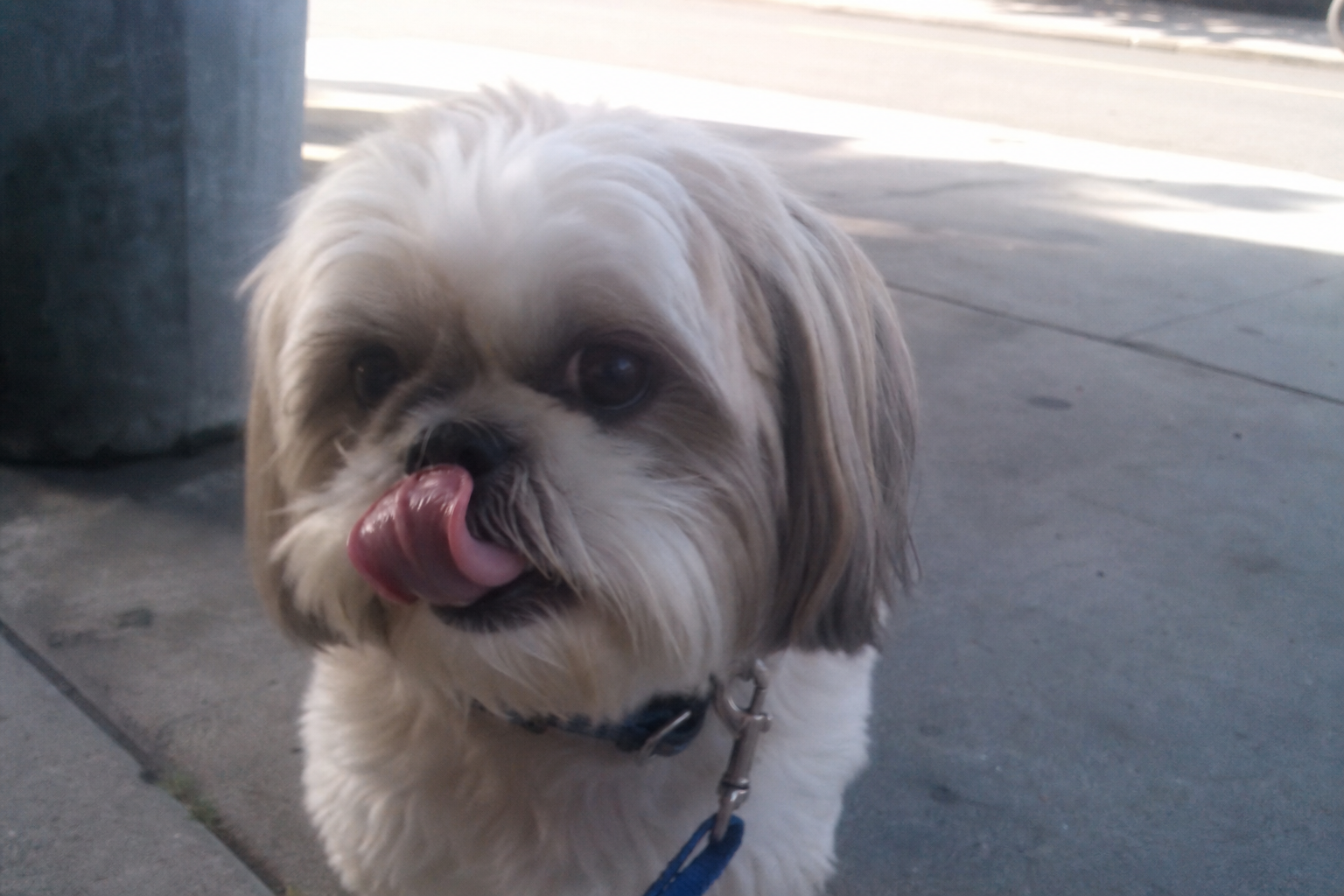
The biggest myth propagated by the online pet community is that lip licking means a dog is hungry or anticipating food. That is a dangerous oversimplification that gets dogs pushed into panic attacks because their owners think they are just begging for a snack. Between my three dogs, my five daily regulars, and the ten new dogs I evaluate every month, I see lip licking constantly. Let me introduce you to a Shih Tzu I walk named Gizmo. His owner, Dave, is a guy who insists on bringing Gizmo to loud, crowded outdoor breweries. Dave also wears flip-flops to the gym, which tells you everything you need to know about his decision-making. Dave will sit there drinking an IPA while Gizmo frantically licks his lips over and over again. Dave always laughs and says, 'He just wants a bite of my burger!' No, Dave. Gizmo is terrified. That quick flick of the tongue over the nose is a severe stress signal. It has absolutely nothing to do with food. It is a desperate attempt to self-soothe in an overwhelming environment.
The Nausea Warning
The pet industry loves to focus entirely on behavioral training, but they often ignore the physical realities of dogs. Excessive lip licking isn't always anxiety—sometimes it's a massive red flag for severe nausea. I see this constantly with the new dogs I onboard. If we are in the back of my car heading to a hiking trail and a dog starts licking their lips repeatedly, drooling heavily, and swallowing hard, I know I have about thirty seconds to pull over before they vomit everywhere. It's a physiological response to an upset stomach and motion sickness. If you ignore it and just tell them to 'settle down' from the front seat, you're going to be spending your afternoon scrubbing your upholstery.
Get dog advice that actually works.
The Appeasement Lick
Dogs also use lip licking as a social tool to navigate tricky interactions with other dogs and humans. It is a classic appeasement signal. If a younger, more submissive dog approaches an older, stiffer dog, the younger dog will often lower their head, avert their gaze, and lick their own lips (or even try to lick the older dog's muzzle). They are essentially saying, 'I recognize that you are in charge, I am not a threat, please do not hurt me.' If your dog is constantly lip licking when strangers approach them on the street, they are not asking for pets. They are feeling intimidated and are trying to de-escalate the situation. You need to step in and advocate for their space.
The Pre-Bite Warning
The most dangerous time to ignore a lip lick is when a dog is backed into a corner or guarding a resource. If you reach for a dog's bone, and they freeze, give you a hard stare, and do a quick lip lick, you are milliseconds away from a bite. In this context, the lip lick is the final warning sign of threshold stacking. The dog is so stressed that their brain is short-circuiting. Never ignore a lip lick when a dog's body is rigid. You need to trigger a biological sound interrupt the second you see that lip flick. It breaks the trance before they escalate to a bite.
Snapping Them Out of the Red Zone
When lip licking is driven by pure anxiety, the dog is spiraling into a panic attack. If you try to talk them down with human words, you are wasting your breath. You cannot reason with an animal that is actively having a meltdown. Stop trying to negotiate with them, stop assuming they want a treat, and get them out of the environment before they snap.

Written by
Sammie LaFleur
Professional Dog Walker
Sammie LaFleur is a professional dog walker. She owns three dogs, walks five regular client dogs a day, five days a week, and takes on at least ten new dogs every month. She is an avid reader who enjoys digging into dog science whitepapers. Her writing is built from street-level dog behavior and real data, not recycled pet industry talking points. Her mission is to decode canine body language so owners can stop fighting their dogs and start understanding them. For Sammie, success is measured by a single metric: increasing the number of stress-free, sunny day walks a dog gets to enjoy each year. She writes to bridge the communication gap between species, because she knows exactly what dogs want and what makes them thrive.