
Vocal Signals
Why Dogs Whine And What Whining Can Mean
Ignoring a whining dog is standard advice, but it's often dead wrong. As someone who walks dogs for a living, here's why you should listen.
The 'Ignore It' Garbage
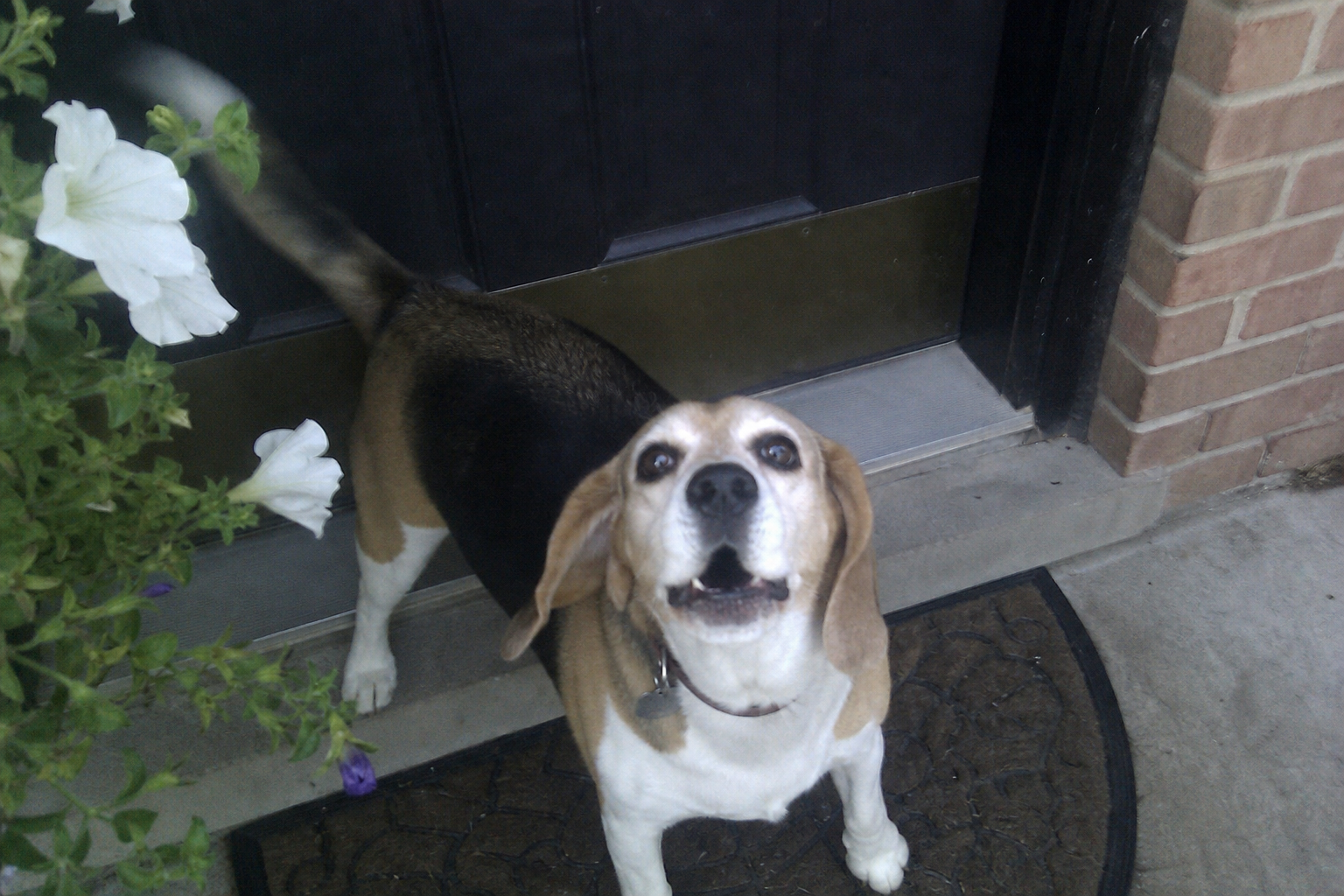
The absolute worst advice the corporate pet industry pushes is to 'ignore whining so you don't reinforce it.' That is a fantastic way to ignore a dog that is in actual, physical pain. The internet treats dogs like malfunctioning software programs instead of living animals. Between my three dogs, my five daily regulars, and the ten new evaluations I do a month, I hear every pitch of whine imaginable. Take Cooper, a Beagle I walk on Mondays. His owner is a tech guy who tracks Cooper's sleep on a $300 smart collar but ignores his actual real-life vocalizations. He told me to completely ignore Cooper's high-pitched whining at the door because 'he's just being manipulative.' I didn't listen. I checked his paws. He had a massive piece of glass embedded between his pads. He wasn't manipulating anyone; he was begging for help. If you blindly ignore whining because a blog told you to, you are failing your dog.
Anxiety vs. Anticipation
The internet will tell you whining is always a sign of severe anxiety. Not true. Whining is often pure, unadulterated anticipation. When I pull up to a client's house, half the dogs in my morning pack start whining before I even touch the doorknob. They know the sound of my car means adventure. The difference is entirely in the body language. An anxious whine comes with a tucked tail, pinned ears, pacing, and lip licking. An anticipation whine comes with loose wiggles, 'happy feet,' and a sweeping tail wag. I walk a Standard Poodle named Bella who literally vibrates and whines the entire elevator ride down to the street. If you punish an anticipation whine, you are just punishing your dog for being excited to see you.
Get dog advice that actually works.
The Extortion Whine
Now, we do have to talk about the 'Extortion Whine.' This is the sharp, repetitive, annoying whine your dog gives you when you are eating dinner or holding a tennis ball. They aren't alerting you to danger, and they aren't in pain; they are extorting you for resources. This is the only time the 'ignore it' advice actually applies. If you look at a demand whiner and say 'No,' or 'Quiet,' you just lost the game. You gave them eye contact and attention. To a bored dog, negative attention is still attention. The only way to beat an extortion whine is absolute, stone-cold silence. Turn your back, cross your arms, and look at the ceiling. The moment they stop and offer a calm behavior, the game resumes.
The Appeasement Whine
There is also a softer, lower-pitched whine that dogs use when they are feeling intimidated or unsure. It is an appeasement signal. You will often hear this when a younger, submissive dog greets an older, stiffer dog. The whining dog will lower their body, avert their eyes, and let out a soft, continuous whine. They are essentially saying, 'I am a baby, please do not hurt me, I respect your authority.' If a new dog is constantly whining in my presence, I play a calm, conspecific dog sound. It cuts right through their frantic whining loop and speaks directly to their instincts.
Breaking the Whine Loop
Sometimes, a dog gets stuck in a frantic whining loop because they are overstimulated and have entered a state of sheer panic. When they are in this state, telling them 'quiet' or 'hush' in English is completely useless. Yelling at a whining dog is like screaming at a crying baby to shut up. It doesn't fix the underlying terror; it just proves to the dog that you are as unstable as they are.

Written by
Sammie LaFleur
Professional Dog Walker
Sammie LaFleur is a professional dog walker. She owns three dogs, walks five regular client dogs a day, five days a week, and takes on at least ten new dogs every month. She is an avid reader who enjoys digging into dog science whitepapers. Her writing is built from street-level dog behavior and real data, not recycled pet industry talking points. Her mission is to decode canine body language so owners can stop fighting their dogs and start understanding them. For Sammie, success is measured by a single metric: increasing the number of stress-free, sunny day walks a dog gets to enjoy each year. She writes to bridge the communication gap between species, because she knows exactly what dogs want and what makes them thrive.