
Body Language
Why Dogs Shake Off (When They Aren't Wet)
Most pet articles describe the shake-off as a drying behavior. They miss the most important thing about it.
Not Just for Wet Dogs
Type "why do dogs shake their bodies" into Google and you will get a parade of articles explaining how dogs use the famous full-body shake to dry off after baths or rain. That is true, but it is the boring half of the story. The most important version of the shake-off has nothing to do with water. It is one of the clearest stress-reset signals in the entire canine body language vocabulary, and almost nobody talks about it. If you can read the dry shake-off, you can read your dog's stress level in real time. You can spot the exact moment they release tension after a hard interaction, a scary noise, or a stressful greeting. It is one of the most reliable single behaviors I use on the job to evaluate a new dog's emotional state.
The Stress Reset Shake
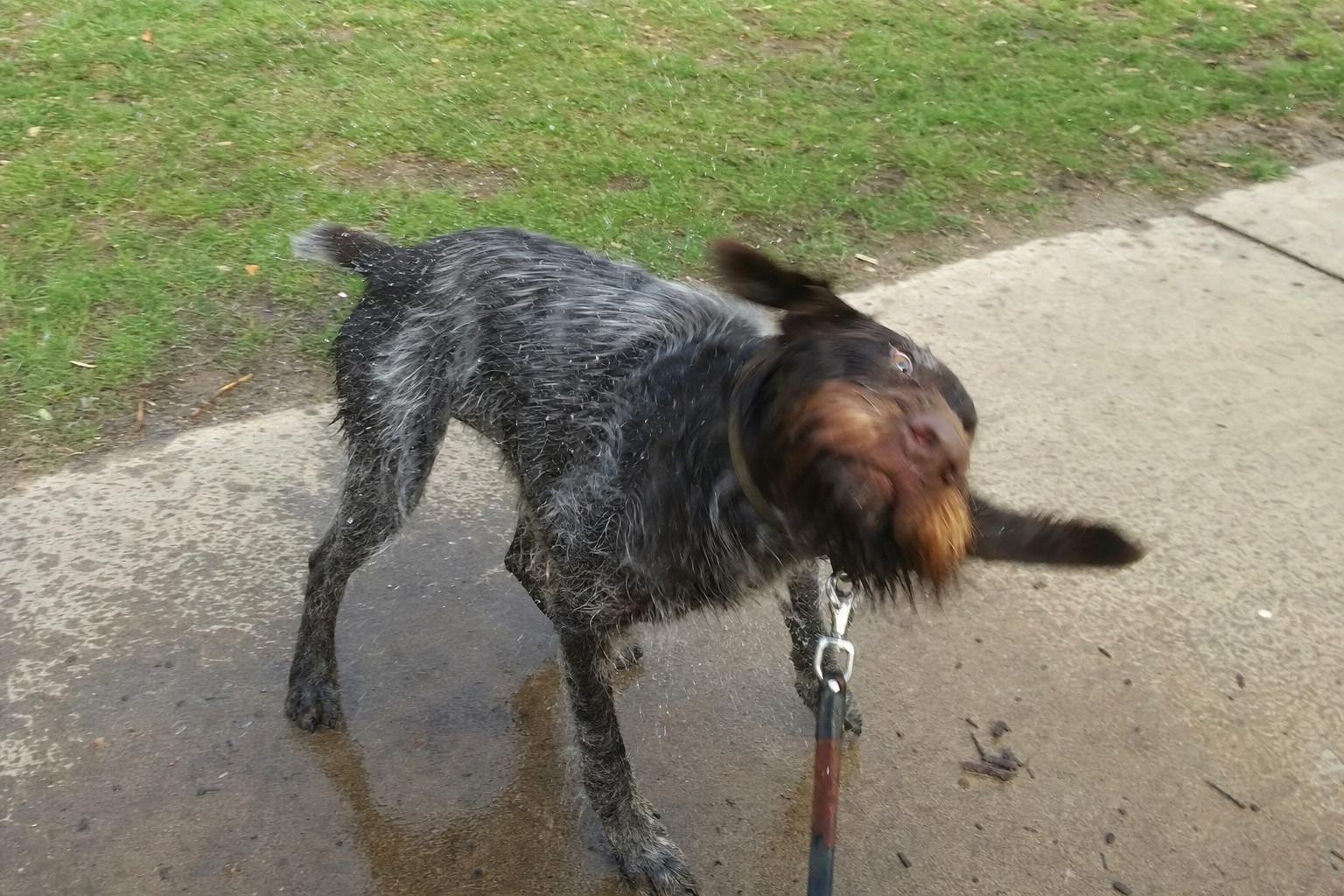
The dry shake-off is a full-body shudder, starting at the head and rippling all the way down the spine to the tail, identical to the way a dog shakes off water. It happens after the dog has been holding tension in their body and the tension passes. Think of it as the canine equivalent of a person taking a long exhale and rolling their shoulders after a stressful phone call. I walk a German Wirehaired Pointer named Toaster on Mondays. Toaster's owners are a couple who only watch movies released before 1995 and refuse to tell anyone why — they own three VCRs and a wall of VHS tapes. Toaster is a sensitive dog who hates the mail truck. Every time the mail truck rumbles past, his body locks up, his ears pin, and the moment the truck disappears around the corner, he does an enormous full-body shake-off. He is literally shaking the stress out of his nervous system. Once the shake is done, his body is loose again.
Get dog advice that actually works.
After the Vet, After the Greeting
You will see the stress-reset shake in extremely specific contexts once you start looking for it. Dogs do it the second they leave the vet's office. They do it after a tense leash greeting with another dog ends. They do it when their owner finally stops scolding them. They do it after a thunderstorm passes. They do it after being released from a hug they did not want. This is gold information for you as an owner. If your dog does a full-body shake-off after an interaction, the interaction was stressful for them, even if it looked friendly to you. If your toddler hugged your dog and the dog immediately shook off afterward, that hug was not the bonding moment you posted about on social media. That hug was something the dog endured.
Reading the Pre-Shake Tension
The shake-off only makes sense if you watch what came right before it. The tension that gets released by the shake builds up during the stressful event, and it shows in the body. The dog will hold their breath. Their muscles will get stiff. Their tail will tuck or go rigid. Their ears will pin. Their mouth will close. Their weight will shift back over their hind legs. When the trigger ends, all of that tension has to go somewhere. The shake-off is the discharge mechanism. If you see a tense body during the event and then a big shake right after, you have just watched a dog process a stressor in real time. The shake is a good sign — it means the dog has the resilience to release tension. A dog who never shakes off after stress is a dog who is holding onto it.
What to Do When You See It
Treat the shake-off as a free diagnostic readout. When you see it, mentally rewind the last 30 seconds and figure out what just stressed your dog. Then ask yourself if that stressor is something you can prevent next time, modify, or avoid entirely. Most owners ignore the shake-off completely. They notice when their dog growls or snaps, because those signals are loud, but they miss every smaller stress signal that came before. Reading the shake-off is the easiest way to catch your dog's stress while it is still small. Catch it small and you never have to deal with it big.

Written by
Sammie LaFleur
Professional Dog Walker
Sammie LaFleur is a professional dog walker. She owns three dogs, walks five regular client dogs a day, five days a week, and takes on at least ten new dogs every month. She is an avid reader who enjoys digging into dog science whitepapers. Her writing is built from street-level dog behavior and real data, not recycled pet industry talking points. Her mission is to decode canine body language so owners can stop fighting their dogs and start understanding them. For Sammie, success is measured by a single metric: increasing the number of stress-free, sunny day walks a dog gets to enjoy each year. She writes to bridge the communication gap between species, because she knows exactly what dogs want and what makes them thrive.