
Body Language
Dog Ear Positions: Relaxed, Alert, Pinned, And Unsure
Forget the textbook diagrams of dog ears. After miles of walking every week, here's how to actually read relaxed, alert, and pinned ears.
The 'Guilty Dog' Garbage
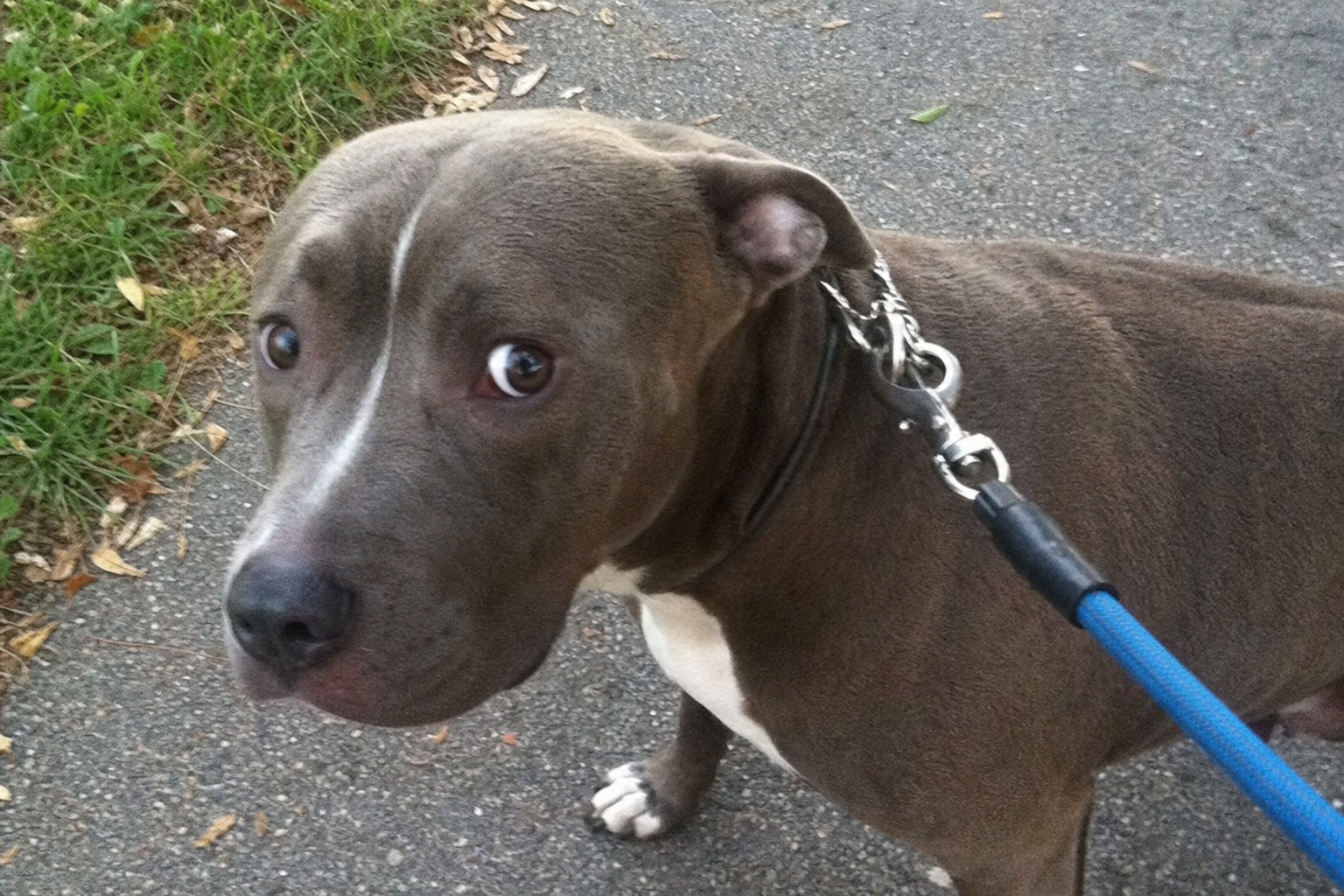
If you Google 'dog ear positions,' the first result is usually a cartoon chart drawn by a corporate copywriter who has clearly never broken up a dog fight. It tells you that pinned ears mean 'guilt.' That is dangerous, anthropomorphic garbage. Dogs do not feel complex moral guilt over chewing your drywall or knocking over the trash. They are reacting to your tone, not reflecting on their sins. Between my own three dogs, the five regulars I walk daily, and the ten new neurotic messes I evaluate every month, I see pinned ears constantly. Take Daisy, a rescue Pittie I walk on Thursdays. Her owner, Mark, is a crypto bro who insists on feeding her a raw vegan diet, which is a whole other nightmare I won't get into. Yesterday, Mark scolded her for getting into the bathroom garbage, and Daisy instantly pinned her ears flat against her skull, lowering her body to the floor. Mark smirked at me and said, 'See? She knows she's in trouble.' No, Mark. She doesn't feel guilty; she feels threatened by a giant primate yelling at her in a confined space.
Appeasement vs. Aggression
Pinned ears are a classic appeasement signal. Daisy was making herself look as small and non-threatening as possible. When you misread pinned ears as 'guilt,' you are completely ignoring your dog's desperate plea for you to calm down and back off. If you continue to pressure a dog that is actively showing you appeasement signals, you are forcing them to escalate to a growl or a bite because their polite request for space was ignored. But ears pinned flat back aren't always about appeasement. If the ears are pinned, but the dog's weight is shifted forward, the lips are drawn back to expose the teeth, and the body is rigid, that is defensive aggression. They are protecting their ears from being bitten in an impending fight. You have to look at the entire body, not just the head.
Get dog advice that actually works.
The Forward Tilt (Locked On)
On the opposite end of the spectrum is the hard forward tilt. When a dog's ears go stiffly forward, they are locked onto a target. The base of the ear engages, the forehead wrinkles slightly, and the ears act like satellite dishes pointing directly at the stimulus. This isn't just them 'listening.' It's a precursor to action. When the ears go hard forward, the weight shifts to the front paws, the tail usually goes stiff, and the mouth closes tightly. It means 'I am about to react.' I see this every day when a squirrel darts across the street. If you wait until the dog is already lunging to try and correct them, you are entirely too late. The moment those ears snap forward, the dog is entering a state of high arousal.
The Asymmetrical Listen
Sometimes you'll see a dog with one ear forward and one ear swiveled back or out to the side. The internet loves to call this 'confusion' or 'curiosity.' In reality, it's just split attention. The dog is monitoring a stimulus in front of them while simultaneously keeping an ear on you or something behind them. It's a sign of a dog that hasn't fully committed to a reaction yet. They are gathering data. This is exactly when you need to use a biological pattern interrupt. A sharp, recorded conspecific alert bark breaks their split attention and forces them to focus on you before they lock onto the target.
The Clinical Interrupt
When a dog's ears snap forward and they enter the Red Zone, human words become white noise. Yelling 'leave it' or 'no' just adds to the chaos of the environment. If you wait until their ears are pinned or locked forward to start training, you have already lost the fight. Read the room before the explosion happens, or get off the sidewalk.

Written by
Sammie LaFleur
Professional Dog Walker
Sammie LaFleur is a professional dog walker. She owns three dogs, walks five regular client dogs a day, five days a week, and takes on at least ten new dogs every month. She is an avid reader who enjoys digging into dog science whitepapers. Her writing is built from street-level dog behavior and real data, not recycled pet industry talking points. Her mission is to decode canine body language so owners can stop fighting their dogs and start understanding them. For Sammie, success is measured by a single metric: increasing the number of stress-free, sunny day walks a dog gets to enjoy each year. She writes to bridge the communication gap between species, because she knows exactly what dogs want and what makes them thrive.