Body Language
Dog Eye Contact: Soft Eyes, Hard Stares, And Whale Eye
The 'alpha' trainers will tell you to stare down your dog. That's dangerous garbage. Here is the real truth about dog eye contact.
The Alpha Stare-Down Myth
The absolute worst piece of garbage advice on the internet is the idea that you need to 'stare down' your dog to establish dominance. The old-school 'alpha' trainers sell this because it looks tough on television and strokes the human ego. I call it a fantastic way to get yourself bitten in the face. I evaluate ten new dogs a month, on top of my five daily regulars and my own three mutts. Last week, I evaluated a Great Dane named Apollo. His owner is a guy who wears tactical sunglasses indoors and decided Apollo was getting 'pushy' over a tennis ball. So, he leaned over this 140-pound animal and locked eyes in a dead, unblinking stare. Apollo didn't submit; he let out a low, guttural growl that vibrated the floorboards. The owner thought Apollo was challenging his authority. No, Apollo was terrified. In the canine world, a direct, unblinking stare from a primate hovering over you is not a leadership tactic; it is a direct threat of violence. You are picking a fight with an animal that has a mouth full of knives.
Soft Eyes vs. Hard Stares
To understand how dogs actually use eye contact, you have to look at the muscles around the eyes, not just the pupil itself. A 'hard stare' is exactly what it sounds like. The dog's eyes become perfectly round, the brow furrows, and the muscles around the muzzle tighten. The dog will often freeze completely still. If a dog gives you a hard stare, they are telling you to back off immediately. It is a pre-bite warning. What you actually want are 'soft eyes.' When a dog is relaxed and feeling affectionate, their eyes will take on an almond shape. The brow is smooth, and they might even squint slightly or blink slowly when they look at you. A slow blink is a beautiful pacifying signal. It means 'I am comfortable with you, and I mean no harm.' If you want to build a bond with a dog, stop trying to win a staring contest. Look at them, give them a slow, relaxed blink, and then look away.
Get dog advice that actually works.
Whale Eye is a Cry for Help
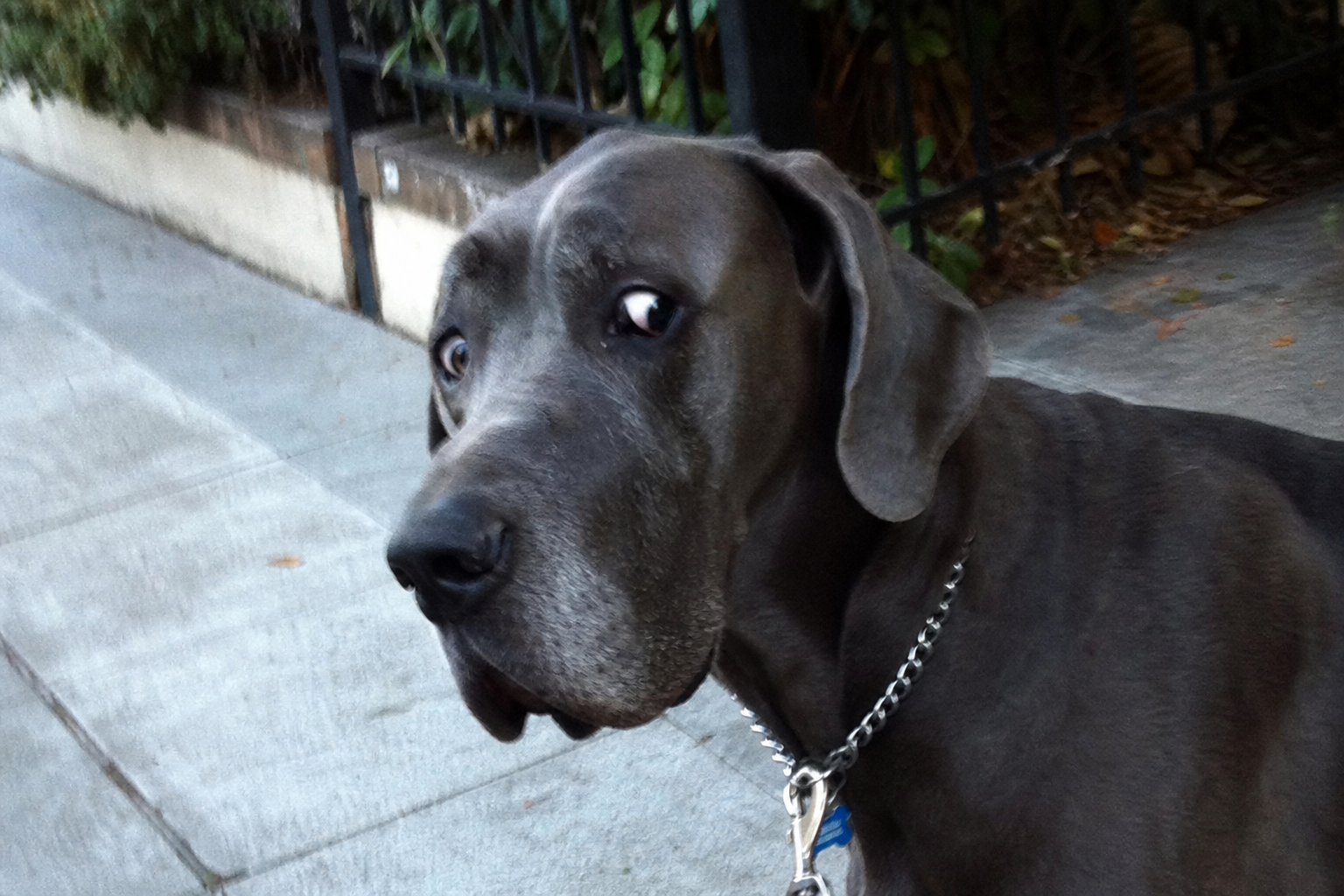
There is another specific type of eye contact that owners constantly misinterpret, and it's called 'Whale Eye.' This happens when a dog turns their head slightly away from you, but keeps their eyes locked on you, exposing the white part of the eye (the sclera) in the shape of a half-moon. People post pictures of this on social media calling it 'sassy side-eye.' It isn't sassy. It is a massive, screaming stress signal. I walk a Corgi named Barnaby whose owner loves to pick him up and force him into tight hugs for selfies. Every single time she does it, Barnaby throws massive whale eye. He is physically trapped, he is incredibly uncomfortable, and he is begging for space. When a dog shows you the whites of their eyes, they are feeling cornered and anxious.
The Avoidance Gaze
Sometimes the most important eye contact is the lack of it. If you are leaning over a dog or reaching for their collar, and they deliberately turn their head away to avoid looking at you, they are not being stubborn. They are actively trying to de-escalate the situation. Looking away is a polite canine request to lower the social pressure. If you grab their face and force them to look at you, you are stripping away their polite communication. If I'm evaluating a dog that constantly avoids eye contact, I trigger a low-level, non-threatening dog sound. It usually gets them to look at me out of biological curiosity without feeling pressured.
Breaking the Fixation
When a dog is giving you a hard stare or whale eye, they are threshold stacking. If you push them, they will snap. At that point, saying 'no' or 'calm down' is useless white noise. Their brain is entirely focused on the perceived threat. You cannot reason with an animal that is locked in a hard stare. You have to break their fixation first, and you definitely don't do that by staring back at them like a psychopath.

Written by
Sammie LaFleur
Professional Dog Walker
Sammie LaFleur is a professional dog walker. She owns three dogs, walks five regular client dogs a day, five days a week, and takes on at least ten new dogs every month. She is an avid reader who enjoys digging into dog science whitepapers. Her writing is built from street-level dog behavior and real data, not recycled pet industry talking points. Her mission is to decode canine body language so owners can stop fighting their dogs and start understanding them. For Sammie, success is measured by a single metric: increasing the number of stress-free, sunny day walks a dog gets to enjoy each year. She writes to bridge the communication gap between species, because she knows exactly what dogs want and what makes them thrive.