
Body Language
What Heavy Panting Really Means
Most pet articles act like panting is always about heat. They are missing the panting that actually matters.
The "He's Just Hot" Excuse
If your dog is panting, the first explanation every dog content site jumps to is temperature. The dog is hot. Give them water. Move to shade. That is fine advice on a 90-degree day. It is dangerously incomplete every other day of the year. Dogs pant for a half-dozen reasons that have nothing to do with temperature, and several of those reasons are emergencies that get missed because the owner assumed "he's just hot." If you only ever interpret panting through a thermometer, you are going to walk past stress panting, pain panting, fear panting, and early-stage medical panting without noticing any of them. Learn to read the different types and you will catch problems weeks before they become expensive.
The Stress Pant
Stress panting looks different from heat panting if you know what to watch for. Heat panting is slow, rhythmic, and steady — long deep tongue extensions, wide-open mouth, full-belly breathing, and it stops within minutes of getting to a cooler environment. Stress panting is fast, shallow, often with the tongue held in a narrower or curled position called a "spatulate tongue," and it does not stop when the environment cools down. Stress panting at the vet's office, in the car, at the groomer, around a specific person, or during a thunderstorm is your dog telling you their nervous system is overloaded. It is the canine equivalent of a human's racing heart and shallow breathing during a panic attack. The pant continues until the trigger is removed, and water and shade will not fix it because the issue is not heat.
Get dog advice that actually works.
The Pain Pant
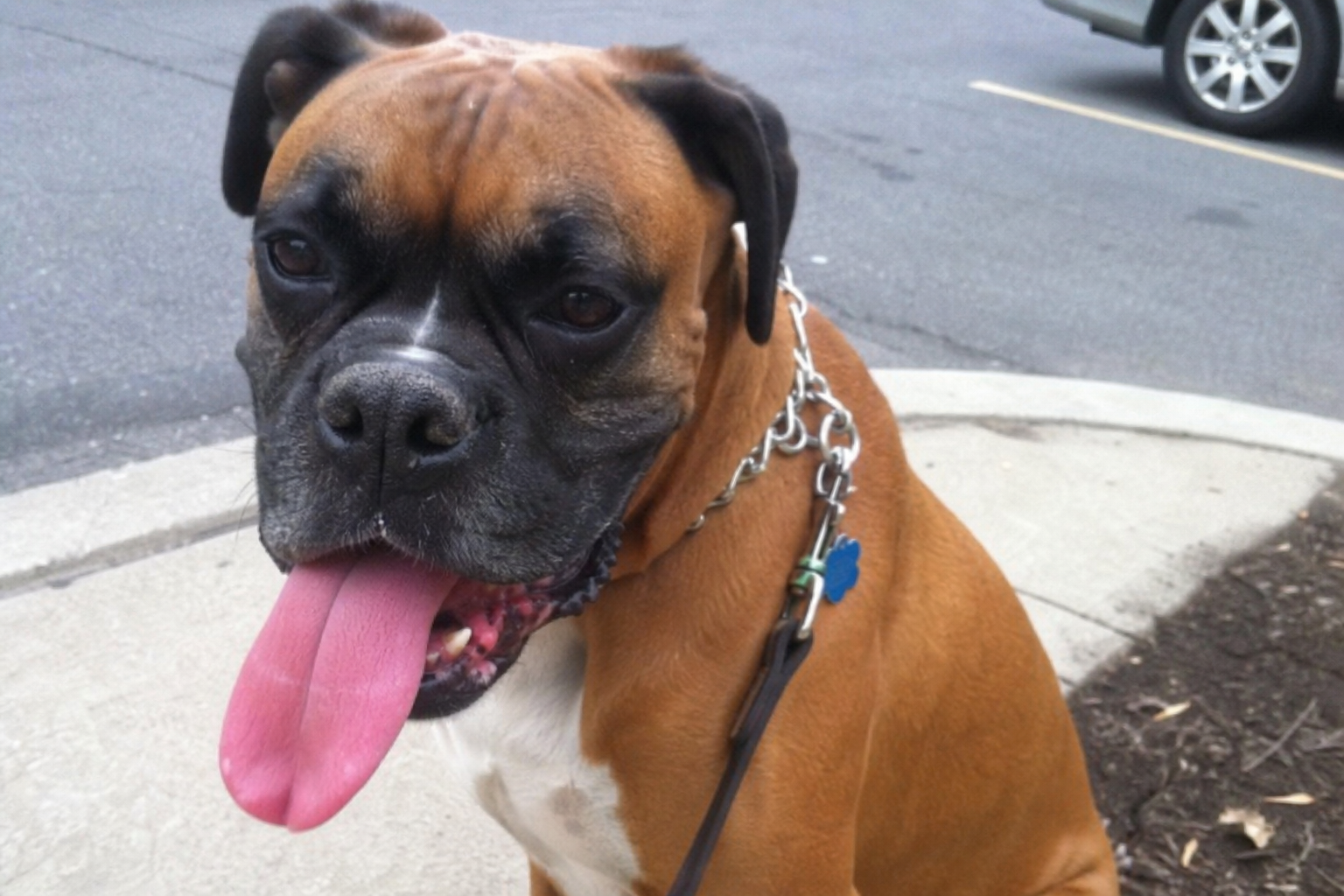
Pain panting is the one that owners miss most often and the one that matters most. Dogs in pain pant with a particular pattern — usually a short, shallow, almost gasping rhythm, often with the mouth held in a tighter, more drawn-back position. They may not be able to lie down comfortably. They may pace. They may pant in a cool room with no obvious stressor. I walk a Boxer named Kettle on Fridays. Kettle's owner bought a used hearse off Craigslist and uses it as his daily driver because, in his exact words, "it's the only car with enough trunk space for my equipment." He refuses to tell anyone what the equipment is. Anyway, last winter, Kettle started panting heavily in 50-degree weather, indoors, with no stressor present. His owner shrugged it off as "boxers run hot." It was actually early-stage bloat. We caught it because I made him take Kettle to an emergency vet immediately when I saw the pant pattern. He needed surgery within the hour. Bloat kills dogs in under six hours, and the first symptom is often pain panting that does not match the environment.
Brachycephalic Owners Read Carefully
This section is specifically for owners of flat-faced breeds — Bulldogs, French Bulldogs, Pugs, Boston Terriers, Boxers, Cavaliers. Your dogs have brachycephalic airway syndrome by genetic design, and they pant constantly because their airways are too narrow to cool themselves efficiently. This means you cannot use panting as a useful baseline signal the way other breed owners can. Your dog pants when they are fine. Your dog pants when they are dying. The visual difference is small. You need to watch for additional signs in flat-faced breeds: gum color changes (blue, purple, or pale), inability to lie down, frantic posture changes, drool that becomes thick and stringy, and respiratory effort that uses the whole abdomen. If you have a brachycephalic dog and you see any of those alongside heavy panting, do not wait. Go to an emergency vet. These breeds tip from fine to dangerous in minutes.
When Panting is an Emergency
The pant patterns that always require an immediate vet visit, regardless of breed: panting plus a distended abdomen, panting plus an inability to lie down, panting plus pale or blue gums, panting plus collapse, panting plus repeated unsuccessful attempts to vomit, panting plus an inability to walk straight, and any heavy panting in an environment that is genuinely cool when the dog has no obvious stressor and has not just exercised. Stop using "he's just hot" as your default explanation for panting. Start watching the rhythm, the tongue shape, the mouth tension, the environment, and the dog's posture. The information is right there on the dog's face. Most owners just never learned to read it.

Written by
Sammie LaFleur
Professional Dog Walker
Sammie LaFleur is a professional dog walker. She owns three dogs, walks five regular client dogs a day, five days a week, and takes on at least ten new dogs every month. She is an avid reader who enjoys digging into dog science whitepapers. Her writing is built from street-level dog behavior and real data, not recycled pet industry talking points. Her mission is to decode canine body language so owners can stop fighting their dogs and start understanding them. For Sammie, success is measured by a single metric: increasing the number of stress-free, sunny day walks a dog gets to enjoy each year. She writes to bridge the communication gap between species, because she knows exactly what dogs want and what makes them thrive.