
Behavior
Murphy The "Murph-nado" Dog Is Cute. He's Also Telling You Something Most Owners Miss.
The viral Knott County rescue dog who spins every Monday at the trash truck is hilarious. Here is what every owner laughing at the video is also showing.
The Murph-nado
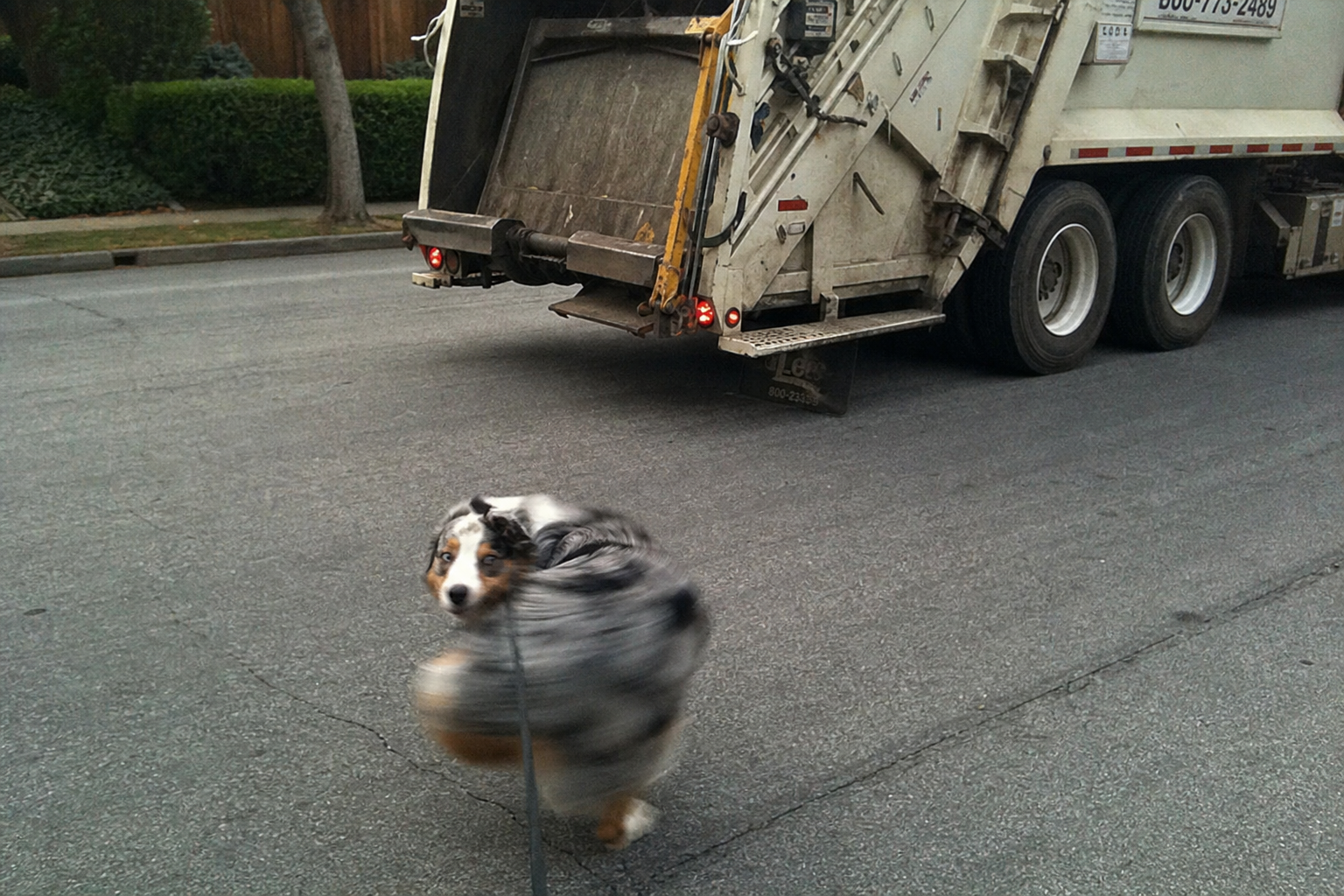
If you have spent any time on dog Facebook in the last few weeks, you have seen Murphy. He is a rescue dog in Knott County, Kentucky, owned by a woman named Heather Pigman, and every single Monday morning when the Rumpke trash truck rolls down the street, Murphy spins in tight, frantic circles in the yard until the truck disappears. His owner films it. The internet has named it the "Murph-nado." The video has racked up serious numbers on Facebook and TikTok and even got picked up by local news for highlighting the eastern Kentucky stray dog crisis. Murphy is genuinely a sweet dog, and his viral fame is doing real work for rescue groups in his area. None of that is in dispute. What I am about to say is also true, and the dog content industry will never write it because it does not get clicks: that spin is not pure joy. That spin is information. And if you have a dog who does something similar, you should be paying attention.
Spinning Is Not Joy
Compulsive spinning in adult dogs, especially spinning that is tied to a specific recurring environmental trigger, is almost never simple joy. It is a high-arousal coping behavior. The dog's nervous system is being hit with more stimulus than it can process, and the body falls back on a hardwired motor pattern to discharge the energy. Spinning is one of the most common discharge patterns in adult dogs, alongside zoomies, humping, and frantic chewing. A dog who spins specifically and only at one trigger — never at other times, never randomly, only when the trash truck comes — is not "celebrating." That dog is regulating. The truck overloads the system, the body spins to release the load, the truck leaves, the spinning stops. It looks goofy in a fifteen-second clip. It is something different up close.
Get dog advice that actually works.
The Trash Truck Is The Trigger
Trash trucks are one of the most common adult-dog phobia triggers in the entire country, and there is good biomechanical reason for it. Hydraulic brakes hiss at pitches that are uncomfortable to canine ears. Mechanical arms move unpredictably in jerky patterns that trigger prey-drive responses. Diesel engines vibrate at frequencies that travel through the ground. And the whole event happens on an unpredictable schedule — slightly different time each week, slightly different route. I take on around ten new client dogs a month, and at least one of every two leash-reactive dogs I get has a trash truck origin story buried in their history. The owners almost never remember it because the early reactions looked harmless, often even funny. Spinning. Pacing. Excited barking. By the time it escalates into lunging at strollers and snapping at delivery drivers, the trash truck connection is invisible.
Foreman the Aussie
I walk an Australian Shepherd named Foreman on Wednesdays. Foreman's owner collects every issue of a defunct local newspaper that stopped printing in 1986 — he has roughly 1,400 of them stacked floor-to-ceiling in his basement, organized by decade. Foreman started spinning on Tuesday mornings when the recycling truck came. The owner thought it was hilarious for almost two years. He filmed it. He showed it to dinner guests. Foreman was the family's funny weekly entertainment. Then last summer Foreman ran out the gate when the truck stopped at the curb and bit the recycling worker in the calf. Eight stitches, a workers' comp claim, and a six-month behavior rehabilitation later, the spinning stopped — because we addressed it as the warning sign it had been since week one. The viral Murphy video has the same structure. Same pattern. Different ending, hopefully.
Watch The Pattern, Not The Spin
If your dog spins exclusively at a specific trigger and never at any other time, that is not a personality quirk. That is a regulation behavior tied to a stress source. The fix is not to film it. The fix is to manage the trigger — create distance, build counter-conditioning, lower the overall stimulation level on trigger days. Murphy is going to be fine. Heather Pigman is clearly a thoughtful owner using his viral fame to help other strays. But the millions of people watching the video are walking away with the wrong lesson. The spin is funny on a phone screen and useful on the dog's end. Both can be true. Read the pattern.

Written by
Sammie LaFleur
Professional Dog Walker
Sammie LaFleur is a professional dog walker. She owns three dogs, walks five regular client dogs a day, five days a week, and takes on at least ten new dogs every month. She is an avid reader who enjoys digging into dog science whitepapers. Her writing is built from street-level dog behavior and real data, not recycled pet industry talking points. Her mission is to decode canine body language so owners can stop fighting their dogs and start understanding them. For Sammie, success is measured by a single metric: increasing the number of stress-free, sunny day walks a dog gets to enjoy each year. She writes to bridge the communication gap between species, because she knows exactly what dogs want and what makes them thrive.