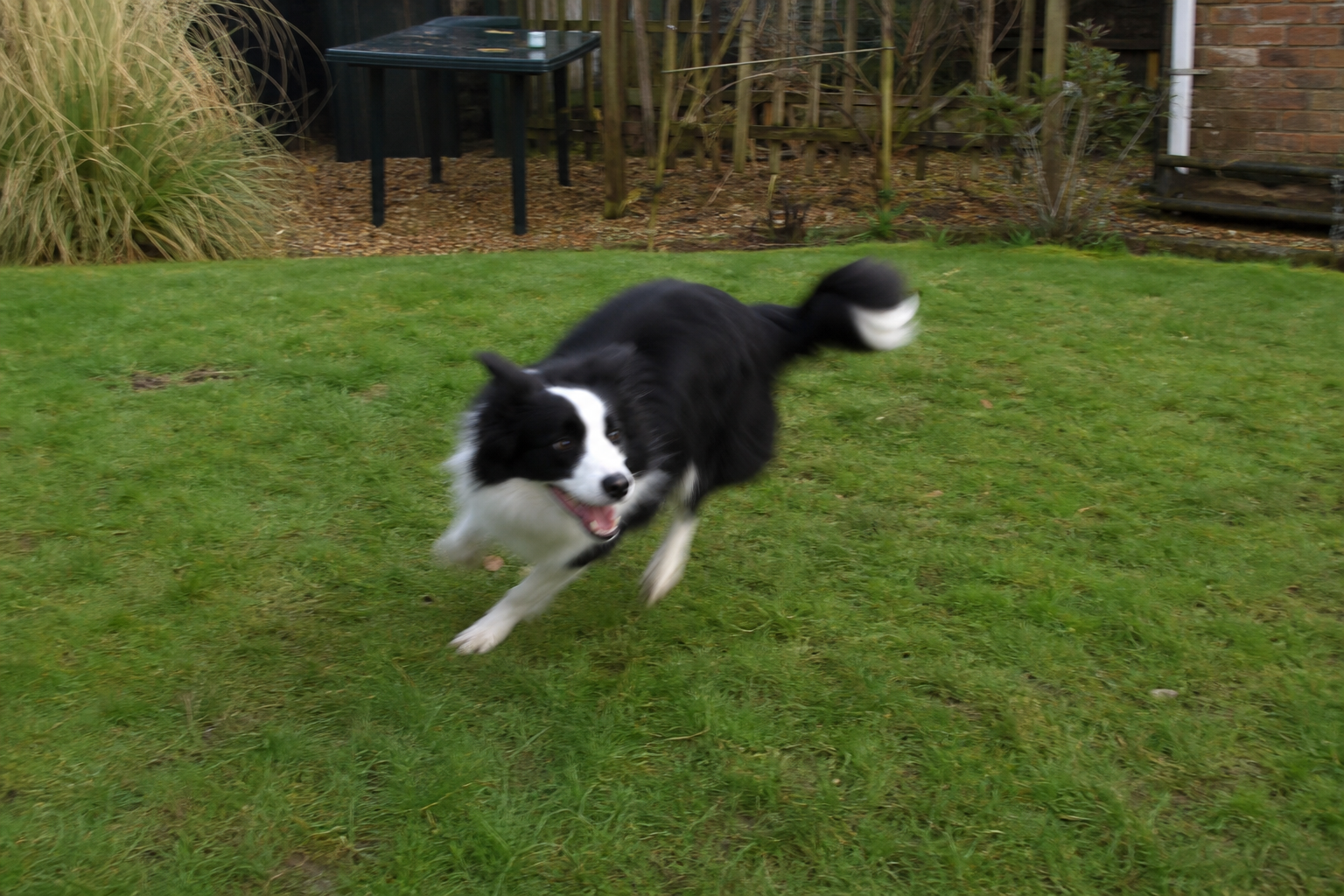
Zoomies aren't just 'cute energy.' They are a massive release of built-up tension. Here's the contrarian take on why your dog is tearing up the yard.
Share
The 'Cute Energy' Myth
The internet loves to share videos of dogs tearing around the living room, calling it 'pure joy' or 'cute energy.' The scientific term is FRAPs (Frenetic Random Activity Periods), and while they can be playful, assuming zoomies always mean your dog is having a great time is a fantastic way to ignore their cries for help.
I evaluate ten new dogs a month, walk five regulars daily, and manage my own three. I see the difference between joy and panic every day. Take a Border Collie I evaluate named Dash. His owner thinks it's hilarious when Dash gets the zoomies in the waiting room of the vet clinic. She films it for Instagram while completely ignoring the fact that the dog is trembling. I had to explain to her that Dash isn't happy; he is having a minor panic attack. The zoomies are his body's way of burning off a massive spike of cortisol and adrenaline caused by the terrifying environment.
The Bath Time Explosion
The most common example of the 'stress relief' zoomie happens right after a bath. Almost every owner has experienced this: you towel the dog off, open the bathroom door, and the dog immediately sprints through the house like they were shot out of a cannon, rubbing their face on the carpet and bouncing off the furniture.
People think the dog is just happy to be clean. Wrong. The dog is experiencing the profound relief of surviving an event they merely tolerated. Most dogs do not enjoy baths; they endure them. They hold still, they suppress their anxiety, and the second they are released, that suppressed energy explodes. It is the canine equivalent of walking out of a grueling three-hour final exam and screaming into the void.
Get dog advice that actually works.
The Witching Hour
Another classic zoomie trigger is the 'Witching Hour,' usually occurring between 6 PM and 8 PM. If you have a puppy or a high-energy working breed, you know exactly what I am talking about. The dog suddenly turns into a gremlin, biting at your ankles and sprinting laps around the coffee table.
This isn't just random energy; it is usually a sign of over-tiredness. Just like a human toddler who fights sleep by throwing a tantrum, an over-stimulated dog will get the zoomies when their brain is too exhausted to regulate their impulses. They don't need more exercise in this moment; they need a forced nap in a quiet, dark room.
Managing the Chaos
If your dog gets the zoomies, the absolute worst thing you can do is chase them. To a dog, chasing validates the frantic energy. It turns their panic or overstimulation into a high-stakes game of tag. You are just pouring gasoline on the fire.
Instead, you need to anchor the room. Stand completely still, cross your arms, and ignore them. If they are spiraling out of control, play a sharp alert bark. It snaps them out of the frantic loop and grounds them back in reality.
Clinical Baselines
If your dog is tearing through the house destroying furniture, they are not having a cute moment of joy. They are burning off a massive spike of adrenaline. If you chase them, yell at them, or try to physically tackle them, you are just validating their panic. Anchor the room, ignore the chaos, and let their nervous system reset. And next time, pay attention to what pushed them over the edge in the first place.
Liked it? Share it.
A quick note from the team: If you are dealing with a dog that won't listen to human commands, we built a tool that might help. The Dog Wave AI app (available on Android) plays 20 scientifically proven, actual recorded dog vocalizations to act as a pattern interrupt.
Written by
Sammie LaFleur
Professional Dog Walker
Sammie LaFleur is a professional dog walker. She owns three dogs, walks five regular client dogs a day, five days a week, and takes on at least ten new dogs every month. She is an avid reader who enjoys digging into dog science whitepapers. Her writing is built from street-level dog behavior and real data, not recycled pet industry talking points. Her mission is to decode canine body language so owners can stop fighting their dogs and start understanding them. For Sammie, success is measured by a single metric: increasing the number of stress-free, sunny day walks a dog gets to enjoy each year. She writes to bridge the communication gap between species, because she knows exactly what dogs want and what makes them thrive.
Free updates, no spam
Stay in the pack.
Get notified when new dog guides drop, free games go live, and the Dog Wave app gets new features.