
Behavior
Why Dogs Roll On Their Backs
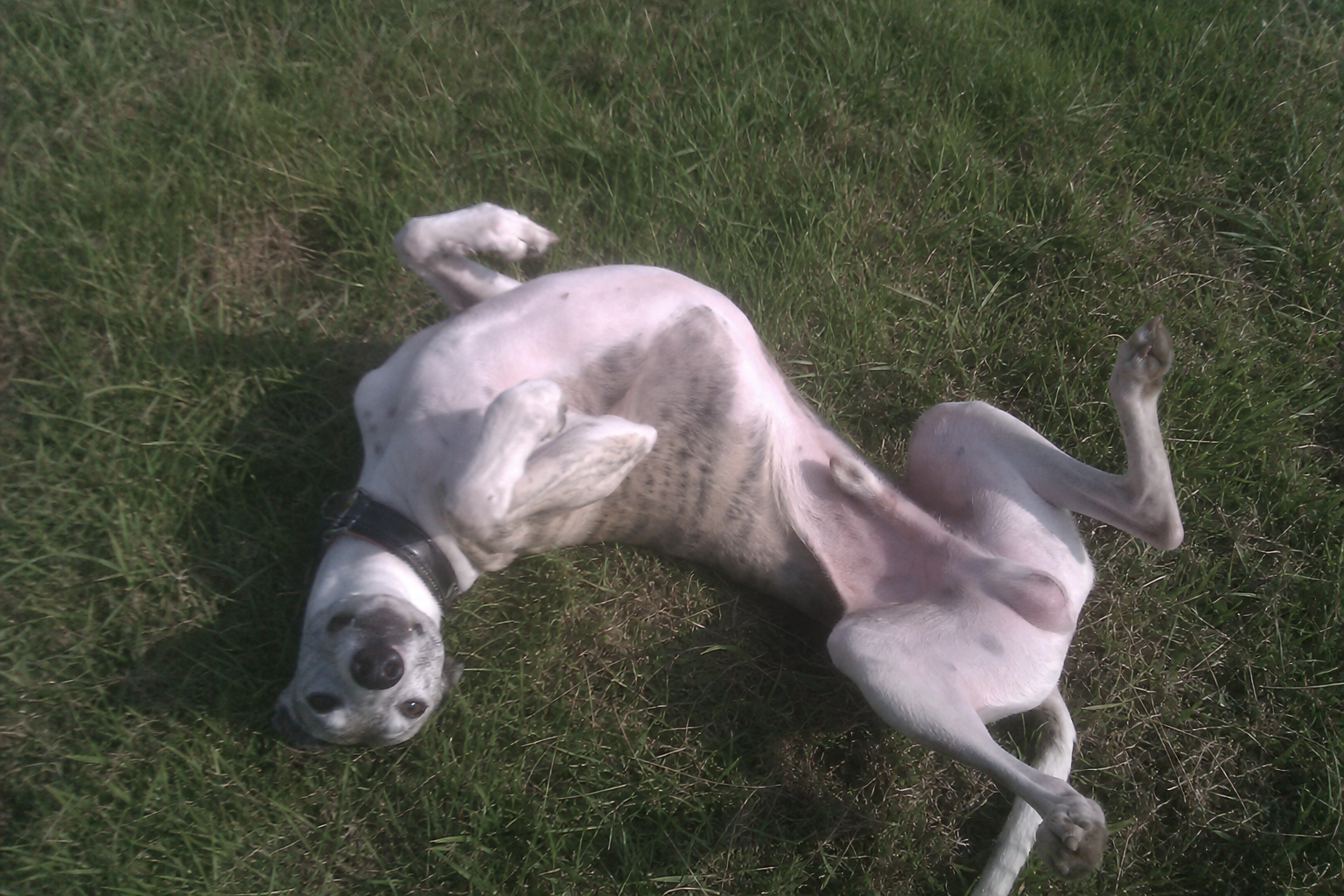
If you think a dog rolling on its back always wants a belly rub, you are going to get bitten. Here is the contrarian truth.
The 'Belly Rub Invitation' Trap
Every greeting card, every Pixar movie, and every Instagram dog account has trained the American public to believe the same lie: when a dog rolls onto their back and shows you their belly, they are inviting you to rub it. This is the single fastest way for a stranger to get bitten by an otherwise sweet dog. Rolling onto the back is not always an invitation. Sometimes it is a desperate plea for you to stop scaring them. A huge percentage of the bites I read about in my professional dog walker forums happen during 'belly rubs' that were never actually consented to in the first place. The owners assume the rolled-over dog wants affection. The dog was actually screaming for space. The hand reaches down, the dog cannot escape because they are pinned on their back, and the teeth come out.
The Appeasement Roll
Let me introduce you to Hubcap, a Whippet I started walking three months ago. Hubcap's owner is a woman who exclusively wears matching velour tracksuits in increasingly unusual colors — last week she was in head-to-toe seafoam green. The day I met Hubcap, the owner immediately scooped her up, plopped her down on her back, and said, 'She loves belly rubs from strangers!' Hubcap was rigid as a board, her ears were pinned, her mouth was tight, and she had massive whale eye. She did not want a belly rub. She was rolling over because she was terrified of me and wanted me to know she was not a threat. The appeasement roll is the most misunderstood behavior in the canine repertoire. The dog flips onto their back not to invite touch but to make themselves as small and non-threatening as possible. It is the canine equivalent of putting your hands up and saying, 'I surrender, please don't hurt me.'
Get dog advice that actually works.
The Consent Test
Every single time I meet a new client dog, I run a consent test. I do not assume any rolled-over dog wants to be touched. I crouch down sideways, never directly facing the dog, hand at my side, and let the dog come to me. If they offer their belly, I give them three seconds of gentle scratching. Then I stop and pull my hand back. If the dog wants more, they will paw at my hand, push their belly toward me, or stretch out further to invite more contact. If they get up, walk away, or freeze, the answer is no. That is the consent test, and it works on every dog, every time. It has kept me from getting bitten for years. The dogs who actually want belly rubs are obvious. The dogs who don't are also obvious, but only if you actually take the time to look.
The Itch Roll
There is another version of rolling on the back that has nothing to do with social communication. Dogs roll on the ground to scratch themselves. If your dog suddenly starts rolling on their back constantly, all over the carpet, the grass, the furniture, they probably have an itch they cannot reach with a paw or their teeth. This is most often a sign of skin allergies, fleas, a yeast infection, or anal gland issues. Look at their belly. Is the skin red? Are there bumps? Are they chewing at their paws after rolling? Are they leaving greasy residue on the carpet? Are they scooting their butt across the floor? Occasional rolling on the back is normal canine behavior. Compulsive, repetitive, daily rolling is a vet visit waiting to happen, and the longer you ignore it, the more expensive it gets.
Read the Face Before You Reach
Before you ever reach for a rolled-over dog's belly, look at the face. A confident dog asking for a belly rub has a soft, almond-shaped eye, a relaxed and slightly open mouth, ears in a neutral position, and a body that is loose and curved. They might wiggle. They might paw the air. They might give you a slow blink. The whole posture looks melted. A terrified dog in an appeasement roll has tight, rounded eyes with visible whites, pinned ears, a closed mouth or a stress-grimace, and a body that is stiff and held in a tense 'C' shape with the tail tucked against the belly. Same general posture from a distance. Completely opposite emotional state up close. If you cannot tell the difference, keep your hands to yourself.

Written by
Sammie LaFleur
Professional Dog Walker
Sammie LaFleur is a professional dog walker. She owns three dogs, walks five regular client dogs a day, five days a week, and takes on at least ten new dogs every month. She is an avid reader who enjoys digging into dog science whitepapers. Her writing is built from street-level dog behavior and real data, not recycled pet industry talking points. Her mission is to decode canine body language so owners can stop fighting their dogs and start understanding them. For Sammie, success is measured by a single metric: increasing the number of stress-free, sunny day walks a dog gets to enjoy each year. She writes to bridge the communication gap between species, because she knows exactly what dogs want and what makes them thrive.