
Behavior
Why Dogs Lean Against You
The "he loves you" interpretation is half right and half dangerous. Here is the contrarian truth.
The "He Loves You" Trap
Every dog content site on the internet wants to tell you that when your dog leans against you, it is the ultimate love language. They want you to feel warm and validated, and they want you to share the article. The truth is messier and a lot more useful. Some leans are affection. Some leans are insecurity. Some leans are a check-in. And a small but important number of leans are a medical red flag. If you reflexively interpret every lean as love, you are going to miss the dog who is leaning because they are anxious, the dog who is leaning because they are unbalanced, and the dog who is leaning because something is starting to go wrong in their body. The "he loves you" framing feels good but flattens out a behavior that actually carries a lot of information.
Big Dogs and Body Pressure
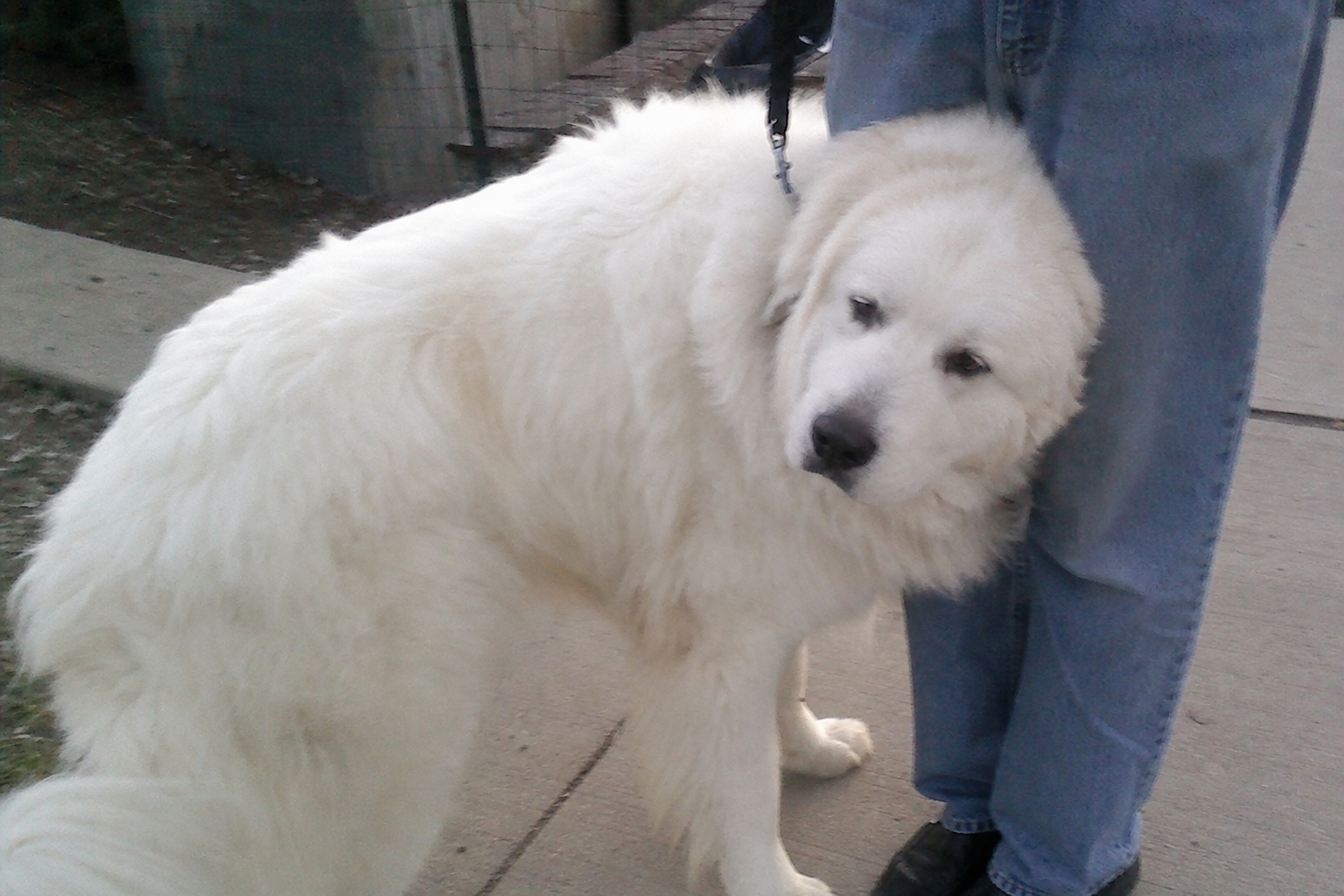
Large breeds — Great Pyrenees, Saint Bernards, Newfoundlands, Mastiffs, Bernese Mountain Dogs — lean far more than small breeds, and there is a partly physical reason for that. Big dogs have heavy heads and tired joints. Leaning gets weight off their feet and props up the front end without the effort of fully standing. For a 150-pound dog, leaning on a human leg is roughly equivalent to a tired adult leaning on a kitchen counter while talking. So when a giant breed leans on you, it is not necessarily a profound emotional moment. It might just be that you are conveniently located and the dog is tired. This is not an insult to your relationship. It is just biology. The dog likes you enough to use you as furniture, which, honestly, is its own form of affection in canine terms.
Get dog advice that actually works.
The Insecurity Lean
Some leans are about emotional anchoring. A dog who is unsure about a new environment, a new person, or a new situation will often press the entire side of their body against their owner's leg. The body contact gives them physical and emotional grounding. They are using their human as a stationary reference point in a confusing world. I walk a 110-pound Great Pyrenees named Custard on Thursdays. Custard's owner is a retired postal worker who, four years after retiring, still wakes up at 4 AM out of habit and reads the entire newspaper, including the obituaries, before sunrise. Custard is a confident dog at home but turns into a leaner the moment a stranger enters the house. He plants his full body weight against his owner's calf and stays there until he has read the new person and decided they are safe. That is not affection. That is a security check.
The Comfort-Seeking Lean
The most genuinely affectionate version of the lean is the relaxed, sleepy, comfort-seeking lean. The dog walks over while you are sitting on the couch, settles their full weight against your leg, sighs, and falls asleep. Soft eyes. Loose body. Slow breathing. That dog is using you as a sleeping spot because being near you specifically is calming to them. This is the lean the internet articles are romanticizing. It is real, and it is meaningful, but it has a particular look. The body has to be relaxed. The breathing has to be slow. The dog has to be choosing the lean voluntarily and unhurriedly. A frantic, pressed, panting lean is something else.
When the Lean is a Vet Visit
This is the part nobody talks about. A dog who has suddenly started leaning constantly, or leaning into walls, or leaning to one specific side when they did not do that before, can be telling you about a medical problem. Vestibular disease in older dogs often presents as constant leaning to one side. Vision loss makes dogs lean against walls to navigate. Severe ear infections can cause head tilt and lean. Even early arthritis can show up as new leaning behavior as the dog tries to offload weight from a painful joint. The pattern that matters is change. A dog who has always been a leaner is fine. A dog who suddenly becomes a leaner in middle age, or who starts leaning specifically against walls and corners, needs a vet workup. The cute love-language article will never tell you this, but it is the single most important thing to know about the behavior.

Written by
Sammie LaFleur
Professional Dog Walker
Sammie LaFleur is a professional dog walker. She owns three dogs, walks five regular client dogs a day, five days a week, and takes on at least ten new dogs every month. She is an avid reader who enjoys digging into dog science whitepapers. Her writing is built from street-level dog behavior and real data, not recycled pet industry talking points. Her mission is to decode canine body language so owners can stop fighting their dogs and start understanding them. For Sammie, success is measured by a single metric: increasing the number of stress-free, sunny day walks a dog gets to enjoy each year. She writes to bridge the communication gap between species, because she knows exactly what dogs want and what makes them thrive.