
Behavior
Why Dogs Eat Poop (Coprophagia)
Stop falling for the "vitamin deficiency" myth pushed by every supplement company on the internet. Here is the contrarian truth about coprophagia.
The "Vitamin Deficiency" Myth
Search "why does my dog eat poop" and the first page of Google is a wall of articles all suggesting the same thing: your dog has a vitamin or enzyme deficiency, and conveniently, you should buy this specific supplement that will fix it. The vast majority of those articles are content marketing dressed up as veterinary advice. The actual peer-reviewed studies on coprophagia — the clinical term for poop-eating — have repeatedly failed to find any consistent link between dietary deficiency and the behavior. Coprophagia is mostly a normal behavior in dogs. It is gross to humans. It is not gross to dogs. Around a quarter of all domestic dogs do it at some point in their lives, and a smaller subset do it habitually. The supplement is not going to fix it. The supplement is going to make somebody money.
Coprophagia is Common and Normal
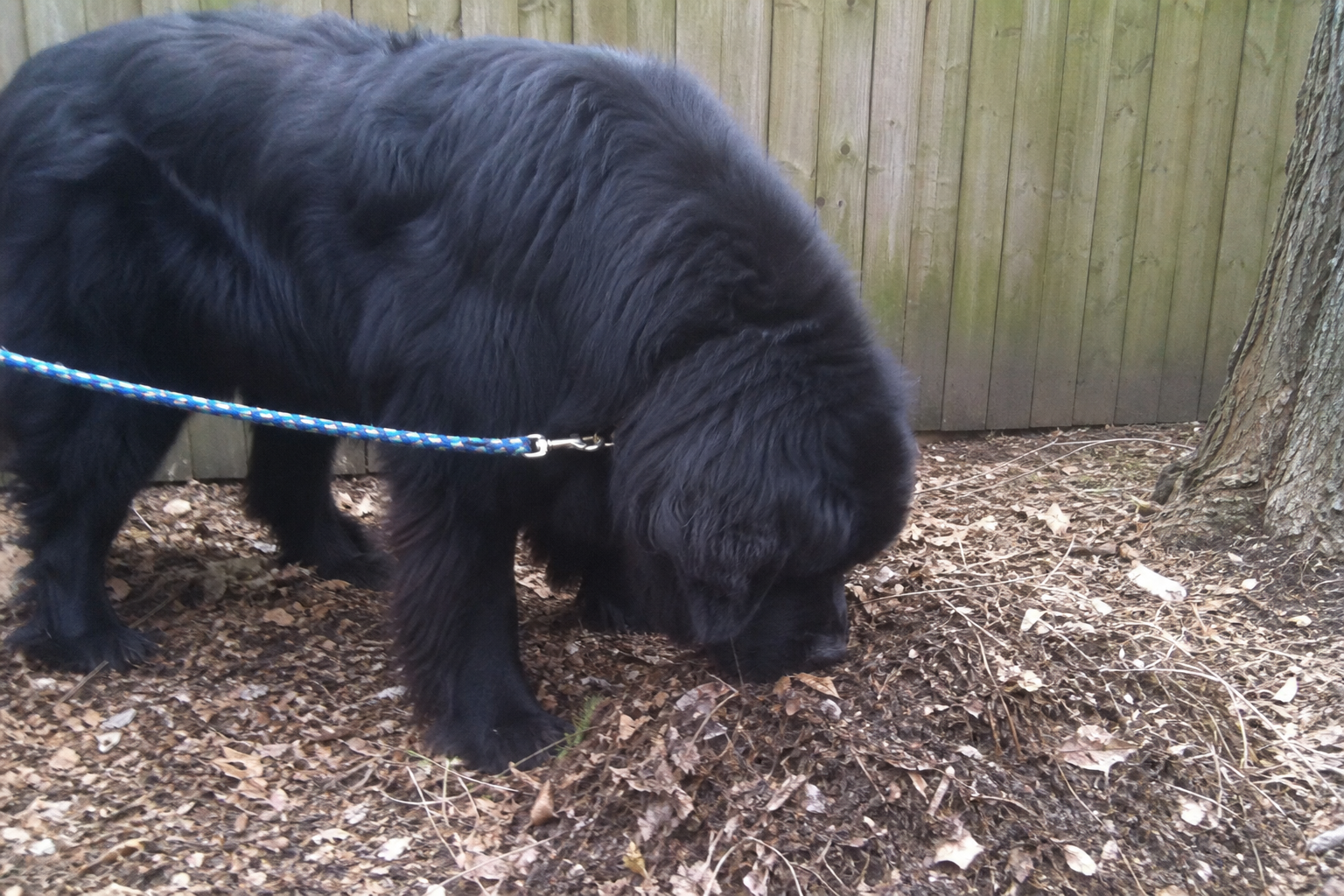
Mother dogs eat their puppies' poop for the first several weeks of life to keep the den clean and the smell down. Puppies imitate their mothers. Wolves and wild canids eat poop opportunistically when they encounter it because feces contains residual nutrients, scent information, and a small amount of usable protein. Domestic dogs inherited all of this. Ottoman, a 140-pound Newfoundland I walk on Tuesdays, has eaten poop on every single walk for the entire eighteen months I have known him. Ottoman's owner runs a podcast about the history of strip mall parking lot design — yes, that is a real thing he does, and he has around 600 dedicated subscribers. He spent eight months convinced that Ottoman had a digestive disease and dropped four figures on diagnostic workups. Every test came back perfect. Ottoman is just a Newfoundland who likes to eat poop. Some dogs are like that.
Get dog advice that actually works.
The Cleaning Instinct
A surprising number of dogs eat their own poop or other dogs' poop because they were taught to. If a puppy gets corrected harshly for pooping inside the house, some of them learn to hide the evidence by eating it. If a multi-dog household has a high-anxiety dog, that dog will sometimes appoint themselves the "cleaner" and eat the other dogs' poop in the yard to keep the space tidy. This is a learned coping behavior, not a sign of illness. The fix is not to punish the dog harder when you catch them. That only reinforces the secretive eating. The fix is to clean up poop immediately every time it happens, so the dog never has the opportunity. Behavior that cannot be practiced cannot be reinforced.
The Boredom Snack
The biggest single driver of habitual coprophagia in my experience is exactly the same thing that drives most weird dog behaviors: under-stimulation. A bored dog with too much time alone in a yard will eventually find the poop interesting. They will sniff it, taste it, and once it has been tasted, the door is open. Dogs with rich enrichment lives — daily walks with sniffing, food puzzles, training sessions, novel environments — coprophage at much lower rates than dogs whose lives consist of being let out into a yard for twenty minutes twice a day. If your dog has started eating poop in adulthood, the first question is not "what supplement should I buy?" The first question is "what is missing from this dog's day?"
What Actually Works
The realistic toolkit for coprophagia is unsexy and boring. Pick up poop immediately. Walk your dog on leash in the yard if you have to, so you can interrupt before they get to it. Teach a strong "leave it" command and pay it with high-value treats. Increase mental enrichment dramatically — sniff walks, food puzzles, scatter feeding in grass. If your dog is eating poop and also losing weight, vomiting, having diarrhea, or showing any other clinical sign, then yes, see a vet to rule out malabsorption issues. Otherwise, accept that your dog is doing a normal, gross, hardwired thing, and manage the environment so they cannot practice it. Stop buying supplements that do not work.

Written by
Sammie LaFleur
Professional Dog Walker
Sammie LaFleur is a professional dog walker. She owns three dogs, walks five regular client dogs a day, five days a week, and takes on at least ten new dogs every month. She is an avid reader who enjoys digging into dog science whitepapers. Her writing is built from street-level dog behavior and real data, not recycled pet industry talking points. Her mission is to decode canine body language so owners can stop fighting their dogs and start understanding them. For Sammie, success is measured by a single metric: increasing the number of stress-free, sunny day walks a dog gets to enjoy each year. She writes to bridge the communication gap between species, because she knows exactly what dogs want and what makes them thrive.