
Daily Life
Why Dogs Eat Grass
The "upset stomach" explanation is mostly garbage. Here is what is actually going on when your dog grazes like a cow.
The "Upset Stomach" Lie
If you Google "why do dogs eat grass," the top results all repeat the same lazy myth: your dog has an upset stomach and is trying to make themselves vomit. This explanation has been recycled in pet content for thirty years, and it is mostly wrong. The actual peer-reviewed research on this topic, including the well-known UC Davis survey, found that fewer than ten percent of dogs who eat grass show any sign of illness before they do it, and fewer than a quarter of them vomit afterward. The vast majority of dogs who eat grass are just eating grass. I evaluate ten new client dogs a month, and at least half of them have an owner who has been to the vet at least once worried that their dog was sick because they were grazing on the lawn. Most of the time, the dog is fine. The pet content industry has trained owners to panic about a behavior that is, in most cases, just an annoying habit.
Dogs Are Opportunistic Grazers
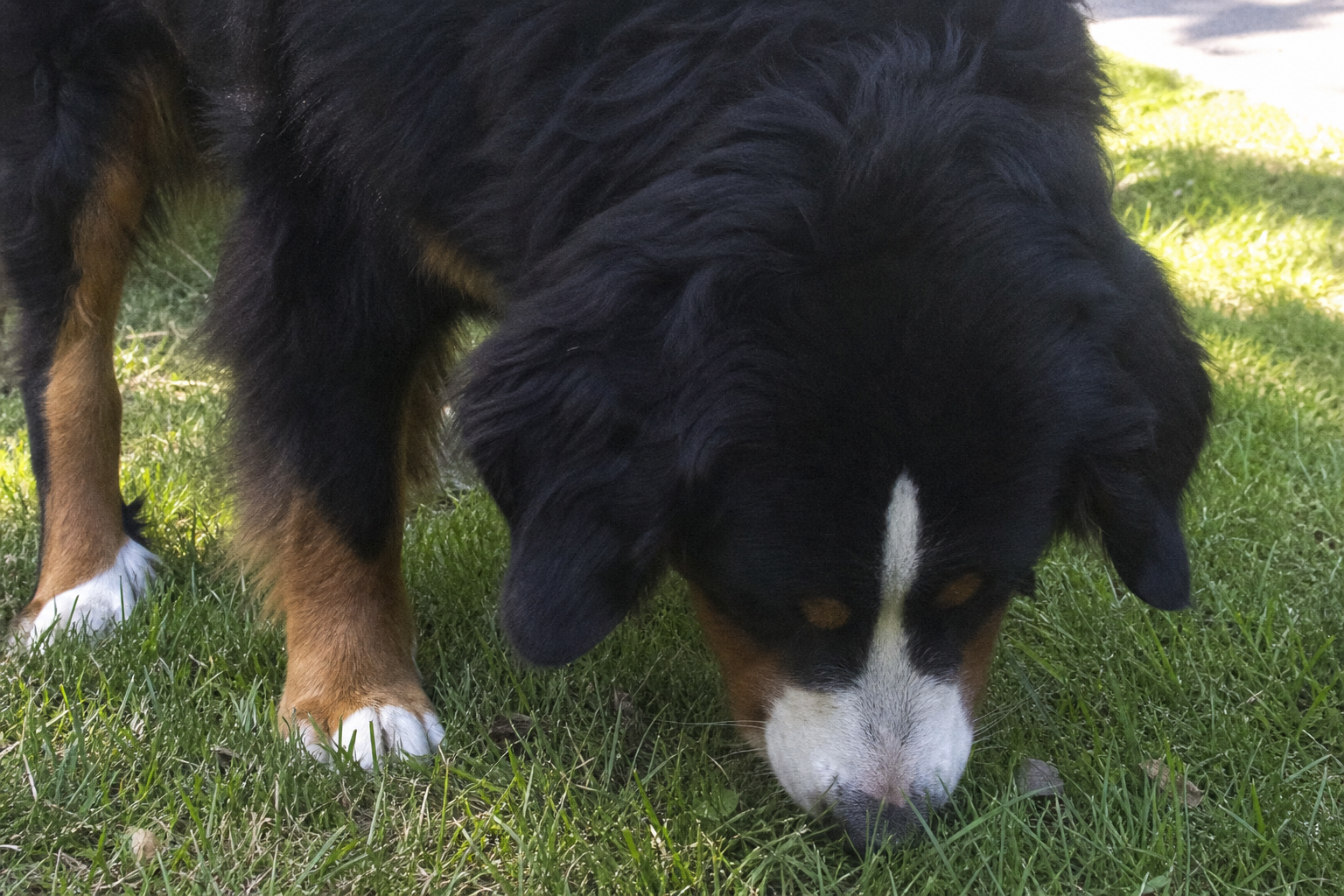
Dogs evolved alongside humans for tens of thousands of years, and during that whole time, they were primarily scavengers and opportunists. Wolves regularly eat plant matter, stomach contents of prey animals, berries, and grasses. Domestic dogs inherited that flexible omnivore wiring. Grass is novel, fibrous, and slightly sweet. It tastes vaguely interesting to them, especially in spring when the new growth is tender. Take Tugboat, a 110-pound Bernese Mountain Dog I walk on Thursdays. Tugboat's owner is a guy who has ordered the exact same diner breakfast every single Saturday morning for eleven straight years — two eggs over medium, hash browns burnt, white toast, no butter. He drove himself crazy for months convinced Tugboat had a chronic stomach issue because the dog kept grazing on the lawn. Tugboat does not have a stomach issue. Tugboat just thinks grass is a snack.
Get dog advice that actually works.
When Grass-Eating Actually Matters
There is a small subset of grass-eating that does matter, and it is the part the lazy content farms never bother to explain. If your dog suddenly starts eating grass frantically — gulping it down, choking on it, vomiting immediately afterward, and repeating the cycle — that is a different behavior. That is a dog trying to relieve nausea, gastric reflux, or actual GI distress. The key word is frantic. Casual grazing is calm. The dog wanders the yard, snips a few blades, chews them slowly, and moves on. Frantic eating is fast, panicked, and accompanied by lip-licking, swallowing, and obvious discomfort. If you cannot tell the difference, just watch the pace. Calm grass eating is not a vet visit. Frantic grass eating is.
The Boredom Graze
The most common reason dogs eat grass is the dumbest one and the one nobody wants to admit: they are bored. They are out in the yard with nothing to do, no other dogs around, no interesting smells, and the grass is right there. So they eat it. It is the canine equivalent of a teenager mindlessly snacking out of the pantry while staring at their phone. If your dog is eating grass on every single walk and turning your yard into a salad bar, the answer is usually not a medical workup. The answer is more mental enrichment. More sniff walks. More puzzle feeders. More interaction. A bored dog will find ways to entertain itself, and grass eating is one of the cheapest options on the menu.
What to Actually Worry About
Stop panicking about casual grass eating. Start paying attention to what kind of plants your dog is eating. Lilies, sago palms, daffodils, oleander, and certain mushrooms can kill a dog in hours. The dog who casually nibbles your lawn is fine. The dog who decided to take a chunk out of your neighbor's azalea is in trouble. Walk your yard once a season and identify every plant in it. Pull the toxic ones. Fence off the questionable ones. Then let your dog graze on the regular grass like the weird little goat they are. Save the panic for actual emergencies.

Written by
Sammie LaFleur
Professional Dog Walker
Sammie LaFleur is a professional dog walker. She owns three dogs, walks five regular client dogs a day, five days a week, and takes on at least ten new dogs every month. She is an avid reader who enjoys digging into dog science whitepapers. Her writing is built from street-level dog behavior and real data, not recycled pet industry talking points. Her mission is to decode canine body language so owners can stop fighting their dogs and start understanding them. For Sammie, success is measured by a single metric: increasing the number of stress-free, sunny day walks a dog gets to enjoy each year. She writes to bridge the communication gap between species, because she knows exactly what dogs want and what makes them thrive.